By Audrey Hayes
Updated November 2026
Finding the best inexpensive sleeping pad comes down to matching a few practical features to how you actually camp. A pad that works for a weekend at a drive-in site may feel too bulky or too cold for a backpacking trip, and a lightweight pad may lack the cushioning you need for a bed-like night. This guide compares seven budget-minded options on the criteria that matter most: insulation (R-value), thickness, packed size and weight, inflation method, durability, and how well each pad suits a specific type of trip. Specifications below come from manufacturer listings and common owner feedback patterns, not from our own testing.
Our top picks at a glance
- 1
 TOP CHOICEBest overallOramoose 4 Inch Ultralight Sleeping Pad with Foot Pump and Pillow | CoView on Amazon
- 2
 TOP CHOICEBest budget pickStansport Pack Lite Camping & Backpacking Sleeping Pad (502-B)View on Amazon
- 3
 TOP CHOICEBest for thick cushioningOvermont Ultralight Camping Sleeping Pad with Pillow and Built-in FootView on Amazon
- 4
 Best for solo campers who want extrasFUN PAC Camping Sleeping Pad, Ultralight Camping Mat with Pillow, BuilView on Amazon
- 5
 Best for group or double-width useMalloMe Sleeping Pad for Camping, Camping Mattress – Bed for OutdoorsView on Amazon
- 6
 Best for no-fuss, no-pump campingFoam Sleeping Pad – Lightweight 0.5-Inch Mat for Camping, Cots, Tents,View on Amazon
- 7
 Best for compact packingWANNTS Ultralight Sleeping Pad with Pillow & Built-in Pump for CampingView on Amazon
Our Top Picks
| Product | Best for | Key feature |
|---|---|---|
| Oramoose 4 Inch Ultralight Sleeping Pad | Backpacking and hiking | 4-inch thickness with built-in foot pump and pillow |
| Stansport Pack Lite Sleeping Pad (502-B) | Budget car camping | 3/4 length design |
| Overmont Ultralight Sleeping Pad | Side sleepers and comfort seekers | 4.7-inch thick inflatable body |
| FUN PAC Camping Sleeping Pad | Solo weekend trips | Built-in foot pump and pillow |
| MalloMe Sleeping Pad for Camping | Shared tents and wider sleepers | Available in single and double sizes |
| Foam Sleeping Pad by Wakeman | Cots, tents, and quick setups | No inflation required, non-slip base |
| WANNTS Ultralight Sleeping Pad | Packing light for multi-day hikes | Carry bag included, compact pack size |
Oramoose 4 Inch Ultralight Sleeping Pad with Foot Pump and Pillow | Compact Water-Resistant Air Mattress for Backpacking, Hiking, Travel, and Camping
Oramoose 4 Inch Ultralight Sleeping Pad with Foot Pump and Pillow | Compact Water-Resistant Air Mattress for Backpacking, Hiking, Travel, and Camping
Best for: Backpacking and hiking where packed size still matters
This pad suits campers who want a bit more cushion than a thin mat without moving into heavy, full-size air mattress territory. It is aimed at hikers and travelers who pack light but still sleep on the ground.
Key specs
- Thickness: 4 inches (per listing)
- Includes foot pump and pillow (per listing)
- Water-resistant construction (per listing)
Pros
- Generous 4-inch loft for a softer sleep surface
- Built-in pump saves a separate purchase
- Pillow included for a more complete setup
Cons
- Thicker profile takes more room in a pack than thin foam
- Owners often recommend a repair kit for longer trips
Bottom line: A strong first pick for hikers who want comfort without a lot of bulk.
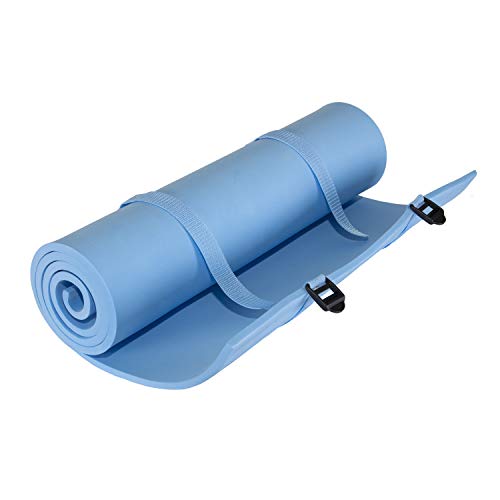
View on AmazonStansport Pack Lite Camping & Backpacking Sleeping Pad (502-B)
Stansport Pack Lite Camping & Backpacking Sleeping Pad (502-B),Blue, 3/4 Length
Best for: Budget car camping and occasional use
This is a simple, no-frills pad for people who camp a few times a year and want something they can throw in the trunk. Its 3/4 length makes it a practical choice for those who do not need full-body coverage.
Key specs
- Design: 3/4 length (per listing)
- Color: Blue (per listing)
Pros
- Simple design with few parts to manage
- Shorter length keeps weight and bulk down
- Well suited to an occasional camper’s budget
Cons
- 3/4 length leaves feet or shoulders off the pad for taller sleepers
- Owners often describe it as less cushioned than thicker models
Bottom line: Good for casual campers who prioritize low cost over full coverage.
View on AmazonOvermont Ultralight Camping Sleeping Pad with Pillow and Built-in Foot Pump | 4.7-Inch Thick Inflatable Sleeping Pad, 1.98 lb Compact Camping Mat for Backpacking, Hiking, Tent and Car Travel
Overmont Ultralight Camping Sleeping Pad with Pillow and Built-in Foot Pump | 4.7-Inch Thick Inflatable Sleeping Pad, 1.98 lb Compact Camping Mat for Backpacking, Hiking, Tent and Car Travel
Best for: Side sleepers and anyone who wants extra cushioning
The thicker profile and pillow make this a comfort-oriented option for people who find thin pads uncomfortable on hips and shoulders. It works across backpacking, tent camping, and car travel.
Key specs
- Thickness: 4.7 inches (per listing)
- Weight: 1.98 lb (per listing)
- Includes pillow and built-in foot pump (per listing)
Pros
- Thick body provides noticeable cushioning
- Listed weight is low for its thickness
- Pillow and pump are included
Cons
- Thicker models pack larger than thin foam pads
- Thermal performance depends on season; check the listing for insulation details
Bottom line: Best for those who sleep on their side and want more padding than a basic pad offers.
View on AmazonFUN PAC Camping Sleeping Pad, Ultralight Camping Mat with Pillow, Built-in Foot Pump Inflatable Sleeping Pads Compact for Camping Backpacking Hiking Traveling Tent, Single, Green
FUN PAC Camping Sleeping Pad, Ultralight Camping Mat with Pillow, Built-in Foot Pump Inflatable Sleeping Pads Compact for Camping Backpacking Hiking Traveling Tent,Single,Green
Best for: Solo weekend trips and casual backpacking
This single-person pad is designed for campers who want a compact, all-in-one kit with a pillow and pump. It fits well in a tent or on a cot-free campsite for a few nights.
Key specs
- Size: Single (per listing)
- Color: Green (per listing)
- Includes pillow and built-in foot pump (per listing)
Pros
- Compact all-in-one setup
- Single size keeps weight manageable
- Built-in pump avoids extra gear
Cons
- Not sized for two or for very tall sleepers
- Owners often advise checking valves before each trip
Bottom line: A practical pick for solo campers who want everything in one package.
View on AmazonMalloMe Sleeping Pad for Camping, Camping Mattress – Bed for Outdoors Built-in Foot Pump Air Mattress for Backpacking Leak-Resistant Inflatable Travel Mat Compact Ultralight Single & Double
MalloMe Sleeping Pad for Camping, Camping Mattress – Bed for Outdoors Built-in Foot Pump Air Mattress for Backpacking Leak-Resistant Inflatable Travel Mat Compact Ultralight Single & Double
Best for: Shared tents and campers who want a wider sleeping surface
Offered in single and double sizes, this pad suits couples or anyone who wants more width than a standard single pad provides. It is a sensible choice for car camping and family tent setups.
Key specs
- Sizes: Single and double (per listing)
- Built-in foot pump (per listing)
- Leak-resistant construction (per listing)
Pros
- Double option offers room for two
- Built-in pump simplifies inflation
- Leak-resistant design is a useful feature
Cons
- Double size is bulky to carry on foot
- Owners sometimes report it needs more inflation time than a manual pump setup
Bottom line: Best for couples and car campers who prioritize width over packed size.
View on AmazonFoam Sleeping Pad – Lightweight 0.5-Inch Mat for Camping, Cots, Tents, Backpacking, and Yoga – Non-Slip and Waterproof with Handle by Wakeman (Black)
Foam Sleeping Pad – Lightweight 0.5-Inch Mat for Camping, Cots, Tents, Backpacking, and Yoga – Non-Slip and Waterproof with Handle by Wakeman (Black)
Best for: Cots, tents, and quick setups with no inflation required
Foam pads never leak and need no pump, so they suit campers who want a reliable, low-maintenance option. The 0.5-inch profile is thinner than inflatable pads, so it works best as a layer under a cot or on a firm surface.
Key specs
- Thickness: 0.5 inch (per listing)
- Non-slip and waterproof surface (per listing)
- Handle for carrying (per listing)
Pros
- No inflation or leaks to worry about
- Waterproof surface handles damp ground
- Handle makes it easy to carry
Cons
- Thin profile offers limited cushioning on hard ground
- Bulkier to pack than rolled inflatable pads
Bottom line: A dependable choice for campers who value simplicity and do not mind firmer sleep.
View on AmazonWANNTS Ultralight Sleeping Pad with Pillow & Built-in Pump for Camping | Lightweight Inflatable Sleeping Airpad, Compact Camping Pad Equipped with Carry Bag, Ultimate for Hiking, Blue
WANNTS Ultralight Sleeping Pad with Pillow & Built-in Pump for Camping | Lightweight Inflatable Sleeping Airpad, Compact Camping Pad Equipped with Carry Bag, Ultimate for Hiking, Blue
Best for: Packing light for multi-day hikes
This pad is built around a small packed size and includes a carry bag, which helps hikers keep weight and bulk under control on longer routes.
Key specs
- Includes carry bag (per listing)
- Pillow and built-in pump (per listing)
- Color: Blue (per listing)
Pros
- Compact packed size
- Carry bag included
- Pillow and pump in the package
Cons
- Thinner than the 4-inch and 4.7-inch models above
- Owners often recommend packing a patch kit for multi-day trips
Bottom line: A good fit for hikers who want the smallest possible pack footprint.
View on AmazonBuying Guide
R-value and insulation
R-value measures how well a pad resists heat loss to the ground. Higher numbers mean more warmth. Summer campers can often get by with a low R-value, while shoulder-season and cold-weather campers need more. Check the manufacturer’s listing for an R-value, since insulation is not always stated on budget models.
Good picks for this: Oramoose 4 Inch Ultralight Sleeping Pad, Overmont Ultralight Camping Sleeping Pad
Thickness and comfort
Thickness is the most noticeable factor for comfort. Pads around 4 inches or more tend to feel closer to a bed, while pads under an inch can leave hips and shoulders feeling the ground. Side sleepers usually benefit most from extra loft.
Good picks for this: Overmont Ultralight Camping Sleeping Pad, Oramoose 4 Inch Ultralight Sleeping Pad
Packed size and weight
If you carry your pad on your back, packed size and weight matter more than almost anything else. Compare the listed weight and packed dimensions, and remember that inflatable pads usually pack smaller than foam pads of the same length.
Good picks for this: WANNTS Ultralight Sleeping Pad, Overmont Ultralight Camping Sleeping Pad
Inflation method
Built-in foot pumps are convenient and reduce the number of separate items to pack. Manual or breath inflation works but takes effort, and some owners find that a pump with a fixed seal is easier to use than an open valve. Foam pads need no inflation at all.
Good picks for this: FUN PAC Camping Sleeping Pad, Foam Sleeping Pad by Wakeman
Size and fit
Measure yourself before buying. Full-length pads suit most adults, while 3/4-length pads save weight but leave the lower legs or shoulders uncovered. Double-width pads are useful for couples or for anyone who rolls around at night.
Good picks for this: MalloMe Sleeping Pad for Camping, Stansport Pack Lite Camping & Backpacking Sleeping Pad
Durability and puncture resistance
Inflatable pads are more prone to punctures than foam, especially on rocky ground. Look for a leak-resistant or water-resistant construction and carry a repair kit on trips where you cannot easily replace the pad. Foam pads are less prone to failure but wear out over time.
Good picks for this: Foam Sleeping Pad by Wakeman, MalloMe Sleeping Pad for Camping
Care and storage
Store inflatable pads loosely rolled or partially inflated rather than compressed in a stuff sack for long periods. Dry the pad fully before storing to prevent mildew. Clean with mild soap and water, and avoid sharp objects near the surface.
Good picks for this: Oramoose 4 Inch Ultralight Sleeping Pad, FUN PAC Camping Sleeping Pad
FAQ
Is an inexpensive sleeping pad good enough for camping?
For many campers, yes. Budget pads perform well on car camping trips and warm-weather use. The main trade-offs are usually less insulation, less cushioning, and a higher chance of wear over time. If you camp in cold conditions or sleep on hard ground, check the R-value and thickness closely before buying.
What R-value do I need for a sleeping pad?
Summer camping typically calls for a lower R-value, while three-season and cold-weather trips call for higher values. Many budget pads do not list an R-value, so if insulation is critical, confirm the figure in the manufacturer’s specifications before you rely on the pad in cold weather.
How thick should a sleeping pad be?
Thickness is a matter of comfort. Pads around 4 inches or more give a softer, bed-like feel, while thinner foam pads offer more ground feel and lower bulk. Side sleepers and people with joint sensitivity usually prefer thicker pads.
Should I choose foam or inflatable?
Foam pads never leak and need no pump, which makes them a dependable choice for cots and rough conditions. Inflatable pads offer more cushioning and pack smaller, but they can puncture and take longer to set up. Your choice depends on whether you value comfort or simplicity more.
How do I keep an inflatable pad from leaking?
Inspect the pad before each trip, inflate it at home to check for slow leaks, and keep it away from sharp rocks and roots. Carry the repair kit recommended for your specific model. If a pad keeps losing air, consult the manufacturer’s warranty or customer service for guidance.
Can a sleeping pad be used for yoga or as a floor mat?
Foam pads are often used for yoga, camp chairs, or as a floor mat because they are flat and non-slip. Inflatable pads are less suited to these uses because their surface can shift or compress under load.
Conclusion
The best inexpensive sleeping pad depends on how you camp. For a balance of comfort and packed size, the Oramoose 4 Inch Ultralight Sleeping Pad is a sensible starting point for hikers. Side sleepers and anyone wanting more cushioning may prefer the Overmont Ultralight Camping Sleeping Pad. Solo weekend campers will appreciate the all-in-one FUN PAC kit, while couples and car campers may find the MalloMe double size more practical. Campers who want no inflation at all should consider the Wakeman foam pad, and the Stansport and WANNTS models round out the list for occasional campers and minimalist hikers. Check R-value and dimensions against your conditions before you buy.
Sources
- Guidance on backcountry camping practices, gear considerations, and leave-no-trace principles (nps.gov)
- Consumer product safety information and recall notices for camping and outdoor equipment (cpsc.gov)
- Information on outdoor safety and environmental considerations for campers (usda.gov)
Related reading
- Best Sleeping Pads for Camping
- Top 6 Best Camp Sleeping Pad Picks for Every Trip
- Thermarest Z Lite Sleeping Pad: 4 Best Options Compared (2026)
- Best Sleeping Pad for Side Sleepers: What to Look For (2026)
- Air Bed vs Sleeping Pad: 6 Best Picks Compared for Camping (2026)
- 7 Best Sleeping Pads for Bikepacking Compared for Every Route (2026)
About Audrey Hayes
Audrey Hayes is part of our editorial team and reviews and edits our camping equipment guides, checking product details against manufacturer specifications and owner feedback.