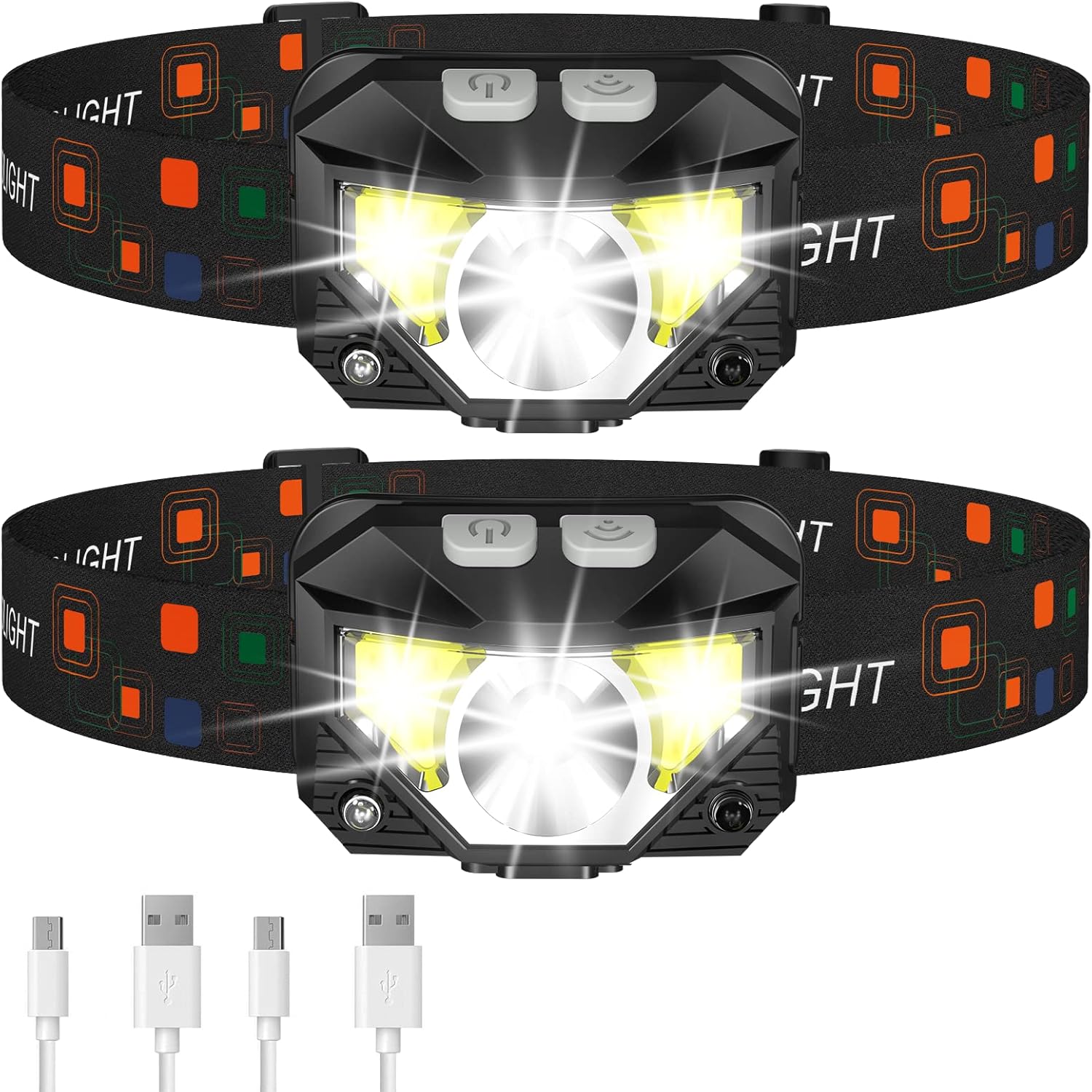
Choosing a camping flashlight can feel confusing once the package lists lumens, beam distance, battery chemistries, and water-resistance codes. The right light is not necessarily the brightest one; it is the one that fits where you camp, how you carry your gear, and how you use light after dark. This guide walks you through brightness, beam shape, batteries, and durability so you can compare options with confidence.
Flashlight, Headlamp, or Lantern?
Before you compare specs, decide which type of light belongs in your pack. A flashlight gives you a directed beam that you can point where you need it; it is handy for walking a trail, checking a bear box, or searching the car. A headlamp keeps the light aimed where you look and leaves both hands free, which makes it the best first light for setting up camp, cooking, and walking with poles. A lantern spreads soft light around a table or inside a tent so several people can see at once, but it does not throw a beam for distance.
| Light type | Best for | Trade-off |
|---|---|---|
| Flashlight | Path light, searching, spotlight-style reach | Takes one hand; beam is directional |
| Headlamp | Hands-free tasks, reading, hiking | Worn on your head; easy to misplace |
| Lantern | Fixed campsite lighting, tents, tables | Bulky; not meant for aiming at targets |
You do not have to choose only one. A practical camping kit often has a headlamp on your head, a flashlight in your daypack, and a lantern for base camp. Inside a tent, use only battery-powered lights, never anything that burns.
Understanding Brightness: Lumens and Beam Distance
Lumens measure the total amount of visible light a flashlight produces. More lumens usually means a brighter light, but not necessarily a longer reach. Beam distance, listed under the ANSI FL1 style rating, tells you how far the beam travels before it dims to a very low level, roughly the brightness of moonlight. In practical terms, your eyes will pick out objects at a shorter distance than the rated beam distance, so treat the number as a comparison tool rather than a promise.
For camping, think about the tasks involved. Reading a map or sorting gear in a tent calls for only a modest output. Walking a dark trail or checking a wide meadow calls for enough light to see uneven ground and movement. Very high output is useful when you need to inspect a distant sign, scan a treeline, or search for a dropped key, but it drains the battery faster and can feel harsh in close quarters. A common rule of thumb is to choose a light with more than one brightness setting so you can dial it back for close work.
Flood Versus Spot: Beam Shape
Beam shape determines how the light is used. A flood beam spreads a wide, even pool of light; it is comfortable for close work, camp chores, and reading. A spot beam concentrates light into a tight circle that travels farther, making it useful for finding trail markers or seeing across a clearing. Many camping flashlights fall in between: a focused hotspot with enough surrounding spill to show the ground ahead of you.
Some flashlights let you zoom by sliding or rotating the head, but a zooming head can be less water-resistant than a fixed lens. If you expect rain, favor a light with a sealed, fixed beam and check its water rating. For all-around camping, look for a beam that has a usable hotspot and decent spill rather than an extremely tight pencil beam or a formless wall of light.
Controls, Mode Memory, and Lockout
A flashlight’s interface matters more than you might think. A simple push-button light is easy to operate in gloves. Multi-mode lights offer high, medium, low, and sometimes strobe or SOS modes. Low and medium modes are useful inside a tent to protect night vision and stretch battery life. Strobe and SOS modes are less important for campers, but they appear on many models. Choose a light whose modes are easy to reach, especially with cold fingers.
Mode memory means the light starts in the mode you last used. Some campers like this because they can leave it on low. Others prefer a light that always starts on the same setting so they are never surprised by a bright flash. Think about how you will switch between modes in the dark.
Lockout prevents the switch from being pressed accidentally in a pack, pocket, or glovebox. Some lights lock out by twisting the tailcap a quarter turn; others use a long press on the button. If the flashlight will ride in a bag with other gear, lockout can save your battery and keep the lens from turning on while packed.
Battery Types: Disposable, Rechargeable, and Built-In
Battery choice shapes weight, convenience, and cold-weather behavior. AA-powered lights are easy to refill; you can pick up batteries almost anywhere or borrow them from another device. Standard alkaline batteries are fine for short trips, but they lose output in the cold and can leak if left in a light for a long time. For better cold performance and storage, look for AA lights that also accept lithium primary cells; check the label or the manufacturer’s instructions before using them.
Rechargeable cells give high output and lower long-term cost, but they need a charger and a way to recharge on the road. Built-in rechargeable lights have no removable battery and recharge through a cable, which keeps the design simple and weather-sealed. The trade-off is that when the battery dies, you have to wait until you can connect to power. If you already carry a power bank, that can be enough to top it up.
If you want the convenience of a standard battery size, start with AA flashlights. If you prefer to charge from a cable, compare rechargeable flashlights and see how their built-in batteries are charged. Do not mix old and new batteries, and do not mix battery types in the same light. Dispose of damaged or leaking batteries according to your local rules.
Weather Resistance and Water Ratings
Camping lights get wet. A light that lives in a pocket through a drizzle needs less protection than one that might be dropped in a creek. The IPX rating tells you how much water it can resist. In general, an IPX4 light handles splashes, IPX5 can take water sprayed from a jet, and IPX7 survives brief immersion. The rating appears on the package or spec sheet; when in doubt, follow the manufacturer’s instructions.
The water rating does not tell you how well the light handles dust or impact. A sealed flashlight can still be damaged by a hard drop, so protect it and check the seals. The switch and the tailcap are the usual entry points for moisture, so keep those areas clean and avoid opening the battery compartment while the light is wet.
Cold Weather and Car Storage
Cold weather reduces battery performance, especially for alkaline cells. A light that seems dim at the trailhead may recover once the battery warms up. If you camp in cold weather, keep the flashlight inside your jacket when you can, and store spare batteries in a warm pocket rather than in an outer pack pocket.
Rechargeable lithium-ion batteries also slow down in freezing temperatures, but they generally recover when warmed. Lithium primary batteries, sometimes labeled as lithium AA, perform well in the cold and store without the corrosion risk that comes with alkaline cells. Always follow the manufacturer’s guidance for your battery type.
For a flashlight kept in the car, think about extremes. A hot car in summer or a freezing winter overnight affects battery chemistry and can stress some batteries. A simple approach is to use a battery designed for long storage, like a lithium primary, and to bring the light indoors before long trips to check it. Many car campers keep a flashlight in the glovebox or a padded compartment with a spare set of batteries wrapped so the contacts cannot touch metal.
Common Buying Mistakes
- Choosing the highest lumen number. A very bright light drains batteries quickly and can be too harsh for camp chores.
- Ignoring beam shape. A tight spot beam is poor for reading a map, and a wide flood beam is weak for spotting trail markers.
- Forgetting how the modes work. Mode memory and lockout can matter more than the maximum output.
- Not thinking about battery availability. A built-in battery may be inconvenient on a long trip without power access.
- Overlooking water resistance. Rain and dew can kill a light that lacks a basic IPX rating.
- Leaving batteries in the flashlight after a trip. This can lead to leakage or corrosion, so check the manufacturer’s storage advice.
Care, Cleaning, and Upkeep
Keep the lens clean. Dust and smudges reduce output, so use a soft, dry cloth or the lens cloth that came with the light. Avoid abrasive cleaners that can scratch the coating.
Check the battery compartment terminals and the O-ring seals. Clean corrosion with a dry cloth and replace batteries if they show signs of leaking. If the light is water-resistant, keep the seals lubricated with the product recommended by the manufacturer. Too much lubricant can attract dirt, so apply it sparingly.
Store the flashlight with batteries removed if you will not use it for a while, unless the manufacturer says otherwise. For a built-in rechargeable, store it partially charged in a cool, dry place and check it before a trip. Follow the manufacturer’s instructions for charging, storage, and cleaning so the light stays dependable.
FAQ
How many lumens do I need for a camping flashlight?
Enough for the task. Close work in a tent needs little output; walking in the open needs more. A multi-mode light lets you use a medium output when you need reach and a low output when you want to save battery. Compare the rated beam distance rather than the lumen number alone.
Is a headlamp better than a flashlight?
For hands-free tasks, yes. A headlamp is usually the safest all-around camp light because it stays where you are looking. Keep a flashlight in your pack for tasks that need a wider or longer beam.
Can I use a camping flashlight in the rain?
Check the IPX rating. An IPX4 or higher rating gives some splash protection, while an IPX7 rating can survive brief immersion. Follow the manufacturer’s instructions for your model.
What battery type is best for camping?
It depends on your trips. AA alkaline batteries are easy to replace but weak in the cold; lithium primary AA batteries handle cold and storage well; built-in rechargeables are convenient when you have power access. Choose a type you can manage on the trip.
A camping flashlight is a simple tool: it should stay bright, or dim, exactly how you want it, and it should keep working when the weather turns. Match the beam and battery to your camp routine or to the emergency kit in your car, and you will rarely need to think about it again.