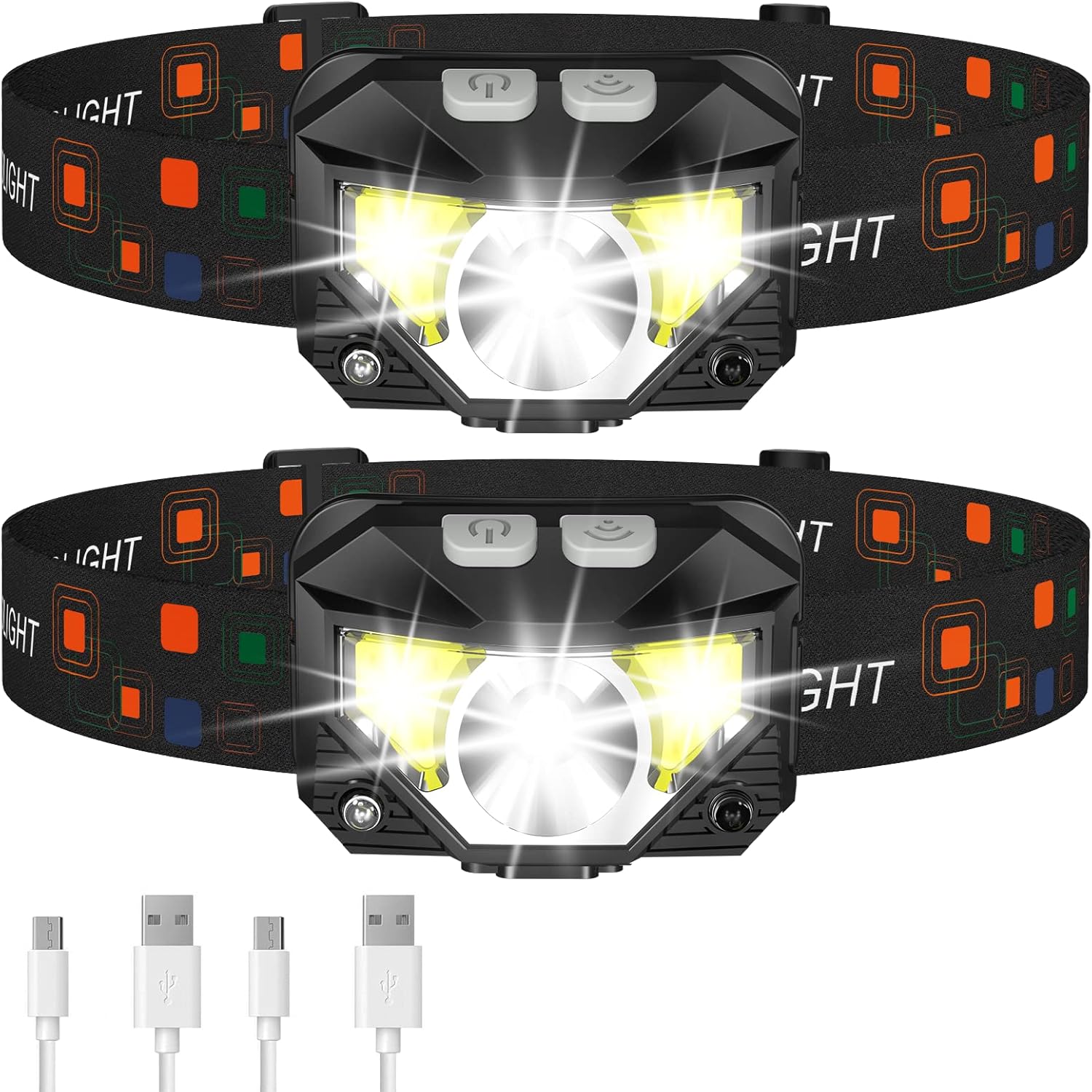
Rechargeable camping lights have become a staple for car campers and families who want reliable illumination without the hassle of disposable batteries or fuel. Before you buy, you need to understand USB-C charging, the trade-offs between built-in and swappable batteries, how cold weather affects lithium cells, and what water resistance ratings really mean. This guide walks through each decision point so you can pick a light that matches how you actually camp.
Understanding Rechargeable Camping Lights
Rechargeable camping lights include lanterns, string lights, task lights, and area lights that contain a built-in battery charged from a wall outlet, car port, or portable power station. They suit campers who stay at developed campgrounds with access to power, as well as those who carry a power bank or solar panel. For tent camping, lighting the inside of a tent safely is a common need, and rechargeable lights eliminate the fire risk of fuel-based alternatives. They are also quieter and produce no fumes, making them a good choice for family trips.
Most modern rechargeable lights use lithium-ion or lithium-polymer batteries. These offer high energy density and hold a charge well when stored properly. However, their performance changes with temperature and use patterns, so it pays to know what to look for on the spec sheet.
Built-In vs. Swappable Batteries
One of the first choices you face is whether the light has a sealed built-in battery or uses removable cells such as standard rechargeable AA or proprietary packs.
Built-In Batteries
Lights with permanently sealed batteries tend to be more water-resistant because there are fewer openings. They are also simpler to use: you plug them in and they charge. The downside is that when the battery eventually wears out after many charge cycles, the entire light becomes unusable. You cannot swap in a fresh cell on a multi-night trip unless you have a way to recharge the built-in battery. For most car campers who return home between trips, this is rarely a problem. For extended off-grid stays, it is worth considering.
Swappable Batteries
Lights that accept removable batteries let you carry spares and instantly restore full brightness. Common formats include rechargeable AA or AAA cells, or proprietary packs that slide out. The advantage is flexibility: you can swap a dead pack for a charged one at camp and recharge the depleted pack later from a power bank or vehicle. Some lights can also run on disposable alkaline cells in a pinch, which is useful if you run out of power far from an outlet. The trade-off is that the battery compartment adds a potential entry point for dust and moisture, so the water resistance rating may be lower than a sealed design.
Think about your typical trip length and access to power. If you camp for a weekend at a site with electricity, built-in is convenient. If you frequently go on week-long trips without hookups, swappable batteries give you peace of mind.
USB-C Charging and Charging While in Use
USB-C has become the standard for charging portable electronics, and most new rechargeable camping lights include a USB-C port. This allows you to use the same cable you already carry for your phone or power bank. Check that the light supports USB-C Power Delivery (PD) if you want faster charging from a compatible charger. Some lights still use micro-USB or a barrel connector, which means you need to carry an extra cable.
Another useful feature is the ability to charge the light while it is running. This matters when you arrive at camp with a partially drained battery and want to use the light while it tops up. Many lights support pass-through charging, but not all. If you plan to keep the light on for extended periods, look for a model that explicitly allows simultaneous charging and use. Be aware that running the light at full brightness while charging may slow the charge rate or generate extra heat, so check the manufacturer instructions.
Runtime Claims and How to Interpret Them
Manufacturers list runtimes for each brightness mode, typically at the lowest and highest settings. The high-mode runtime is often short, sometimes only a few hours, while the low-mode runtime can stretch much longer. Pay attention to the mode you will actually use around camp. For reading or cooking, a medium setting is common. For ambient lighting in a tent, a low setting may be plenty.
Runtimes are measured under laboratory conditions with a fresh battery at room temperature. In real-world use, cold weather, age of the battery, and frequent mode switching all reduce actual runtime. Expect less than the claimed runtime in real camping conditions. If you need a light to last all night on a single charge, choose one with a low-mode runtime that comfortably exceeds your needs by a generous margin.
Power Bank Feature: Charging Other Devices
Many rechargeable camping lights double as a power bank, letting you charge your phone, headlamp, or other USB devices from the light’s battery. This is a convenient backup, especially if you carry only one power source. The feature is most useful in lantern-style lights that have a large battery capacity.
When using a light as a power bank, the output is usually limited to 5 volts at 1 to 2.1 amps, which is enough to charge a phone slowly. Some newer lights support USB-C Power Delivery output for faster charging. Keep in mind that every milliamp-hour you use to charge your phone is a milliamp-hour you cannot use for lighting. If you plan to rely on the light as your primary power bank, choose a model with a large battery and confirm that the power bank function works while the light is off or on.
For dedicated power bank needs, you may prefer a separate power bank and a simpler light. But for short trips or as a backup, the combination can save space in your gear bag.
Cold Weather and Lithium Batteries
Lithium-ion and lithium-polymer batteries lose capacity in cold temperatures. At freezing, you may see a noticeable drop in runtime, and at temperatures well below freezing, the battery may deliver very little power until it warms up. This is a chemical property of lithium cells, not a defect.
If you camp in cold weather, keep the light inside your sleeping bag or close to your body during the day to keep the battery warm. Some lights have a low-temperature cutoff that prevents charging below a certain temperature, typically around 32 degrees Fahrenheit. Attempting to charge a frozen lithium battery can damage it. Always follow the manufacturer guidance on charging temperatures.
For winter camping, carry spare batteries in an inside pocket so they stay warm until needed, and check the maker’s cold-weather guidance for the cells your light uses.
Water Resistance Ratings
Camping lights get exposed to rain, dew, splashes from cooking, and accidental drops in puddles. Water resistance is indicated by an IP (Ingress Protection) rating. The first digit rates protection against solids, and the second digit rates protection against liquids. For camping lights, look for at least IPX4, which means the light is protected from splashing water from any direction. IPX5 handles low-pressure water jets, and IPX6 handles powerful water jets and heavy rain. IPX7 means the light can be submerged in shallow water for a short time.
Do not assume that a higher IP rating makes the light suitable for submersion in a river or lake; always check the manufacturer description. Also note that the charging port cover must be closed for the rating to apply. If the port is exposed, water can enter and damage the electronics. Make it a habit to seal the port cover after charging.
Battery Care and Storage
How you store and care for the battery directly affects how long the light remains useful. Lithium batteries degrade fastest when stored fully charged at high temperatures or fully drained for long periods.
For long-term storage, charge the light to about 50 to 60 percent capacity. This is often indicated by a partial charge indicator on the light or by charging for roughly half the time needed for a full charge. Store the light in a cool, dry place away from direct sunlight. Extreme heat, such as inside a car on a summer day, accelerates battery aging.
If you store the light for several months without use, check the charge level periodically and top it up to the same partial level if it has dropped significantly. Avoid letting the battery drain completely to zero, as deep discharge can permanently damage lithium cells.
When the light no longer holds enough charge for your needs, check whether the battery is replaceable. For sealed units, the entire light may need to be recycled. Some manufacturers offer battery replacement services, so it is worth checking before discarding a light that otherwise works fine.
Common Buying Mistakes
One common mistake is choosing a light based solely on maximum brightness without considering runtime. A very bright light that runs for only a short time may be less useful than a moderately bright light that lasts all evening. Think about the tasks you need the light for: reading, cooking, walking to the restroom, or illuminating a large group area. Each task benefits from a different brightness level and beam pattern.
Another mistake is ignoring the charging cable. Some lights come with a proprietary cable that is easy to lose. USB-C is the most universally compatible. If the light uses a less common connector, buy a spare cable and keep it with your camping gear.
Campers also sometimes overlook the weight and size of the light. A large lantern with a big battery may be great for base camp but overkill for a short hike to the tent. Match the light to the trip. For car camping, weight matters less. For backpacking or hiking into a site, every ounce counts.
Finally, do not assume that all rechargeable lights work well with solar panels. Some lights have charging circuits that are picky about input voltage and current. If you plan to charge from a solar panel, check that the light can accept the panel’s output, or use a power bank as an intermediary.
For more detailed guidance on selecting the right light for your setup, see the guide to choosing a camping lantern and the broader camping lighting section.
FAQ
Can I leave my rechargeable camping light plugged in overnight?
Most modern lights have overcharge protection that stops charging when the battery is full. However, leaving it plugged in for extended periods, such as days, may stress the battery. It is best to unplug once the light indicates a full charge. Follow the manufacturer instructions for your specific model.
How do I know when the battery needs replacing?
If the light no longer holds enough charge to get through a typical evening on the settings you use, or if the battery swells or the casing becomes hot during charging, it is time to replace the battery or the entire light. Swelling is a safety concern and should be addressed immediately.
Can I use a fast charger with my camping light?
It depends on the light. Many lights that support USB-C Power Delivery can accept higher charging currents and charge faster. Lights that do not support PD will charge at their standard rate regardless of the charger. Using a fast charger with a light that lacks PD circuitry will not harm the light, but it will not speed up charging. Check the manufacturer guidance for recommended charger specifications.
What should I do if my light gets wet?
If the light is rated IPX4 or higher and the charging port cover is sealed, a brief exposure to rain or splashes is fine. If the light gets submerged or water enters the charging port, dry it thoroughly before attempting to charge. Remove the battery if it is swappable and let all components air dry in a warm, ventilated area for at least 24 hours. Do not use heat to speed drying, as high temperatures can damage the battery.
Choosing a rechargeable camping light comes down to matching the battery type, charging method, and weather protection to your camping style. Focus on USB-C compatibility, a battery format that suits your trip length, and a water resistance rating that matches the conditions you expect. With proper care and storage, a good rechargeable light will serve you for many seasons. For a closer look at specific options, browse rechargeable camping lights and compare features side by side.