
 By Audrey Hayes
Updated November 2026
A sleeping pad with hammock is a practical choice for campers who want one system that handles both a bed-like sleep surface and a hanging shelter. The picks below were chosen by looking at product listings, brand reputation, and patterns in owner feedback. We weighed packed weight, insulation, how the pad attaches to or sits inside a hammock, and whether the product suits trail use or relaxed camp use. This is a research-based list, not a hands-on test.
Our top picks at a glance
- 1
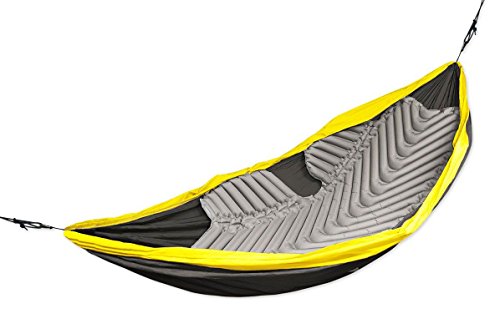 TOP CHOICEBest overallKlymit Hammock V Sleeping PadView on Amazon
- 2
 TOP CHOICEBest for ultralight tripsGear Doctors Ether 17.5oz Ultralight Camping Sleeping PadView on Amazon
- 3
 TOP CHOICEBest for cold-weather hammock nightsGear Doctors ApolloAir 5.2 R-Value Insulated Sleeping PadView on Amazon
- 4
 Best for budget-minded campersPOWERLIX Ultralight Inflatable Camping Sleeping PadView on Amazon
- 5
 Best for built-in comfort extrasFUN PAC Camping Sleeping Pad with PillowView on Amazon
- 6
 Best for proven trail durabilityTherm-a-Rest Z Lite Original Camping and Backpacking Sleeping PadView on Amazon
Our Top Picks
| Product | Best for | Key feature |
|---|---|---|
| Klymit Hammock V Sleeping Pad | Hammock sleeping | V-shaped, non-insulated design |
| Gear Doctors Ether 17.5oz | Ultralight trips | Very low packed weight |
| Gear Doctors ApolloAir 5.2 R-Value | Cold-weather nights | Insulated, 5.2 R-value |
| POWERLIX Ultralight Pad | Budget-minded campers | Repair kit included |
| FUN PAC Camping Sleeping Pad | Comfort extras | Built-in foot pump and pillow |
| Therm-a-Rest Z Lite Original | Trail durability | Closed-cell foam, no inflation |
Klymit Hammock V Sleeping Pad
Klymit Hammock V Sleeping Pad, Non-Insulated
Best for: Hammock sleeping
This pad is designed around hammock use, with a V-shaped profile meant to keep the sleeper centered on the pad. It suits campers who already own a hammock and want a dedicated pad for that setup. For another angle, check out 6 Best Ultralight Camping Sleeping Pads for Backpacking (2026).
Pros
- Shaped specifically for hammock use
- Designed to stay centered on the pad
Cons
- Non-insulated, so it adds little warmth on cold nights
Gear Doctors Ether 17.5oz Ultralight Camping Sleeping Pad
Gear Doctors® Ether 17.5oz Ultralight Camping Sleeping Pad – Backpacking Air Mattress – Camping Mattress Pad – Compact Inflatable Sleeping Mat for Backpacking, Comfortable Outdoor Hiking, Tent, Travel
Best for: Ultralight trips
Listed at a very low packed weight, this pad fits hikers who count every ounce and plan to pair it with a lightweight hammock. It is best for mild-weather trips.
Pros
- Very low packed weight
- Compact when deflated and rolled
Cons
- Thin construction calls for careful handling
Gear Doctors ApolloAir 5.2 R-Value Insulated Sleeping Pad
Gear Doctors® ApolloAir 5.2 R-Value [22oz] Ultralight Insulated Inflatable Camping Sleeping Pad — Backpacking Sleeping Pad— Camping Mattress Compact Lightweight for Hiking—Air Mattress for Backpacking
Best for: Cold-weather hammock nights
Hammocks leave the sleeper exposed underneath, so insulation matters more than on a ground tent. This pad suits shoulder-season and cooler trips where warmth is a priority.
Pros
- Listed with a 5.2 R-value for insulation
- Lightweight for an insulated pad
Cons
- Insulated designs cost more packed space than non-insulated pads
POWERLIX Ultralight Inflatable Camping Sleeping Pad
POWERLIX Ultralight Inflatable Camping Sleeping Pad – Camping Mattress for Backpacking, Hiking, Compact Lightweight Sleeping Mat for Camping, Inflation Bag/Repair Kit Included
Best for: Budget-minded campers
This is a practical option for campers who are just starting out with hammock camping and want a pad that comes with a repair kit and inflation bag. Worth reading next: 5 Best Self-Inflating Sleeping Pad Double Options for Camping in 2026.
Pros
- Inflation bag and repair kit included
- Lightweight for general backpacking
Cons
- Owners often report it is best suited to mild conditions
FUN PAC Camping Sleeping Pad with Pillow
FUN PAC Camping Sleeping Pad, Ultralight Camping Mat with Pillow, Built-in Foot Pump Inflatable Sleeping Pads Compact for Camping Backpacking Hiking Traveling Tent,Single,Green
Best for: Built-in comfort extras
Campers who want a pillow and a foot pump already built in will find this setup convenient for hammock or tent use alike.
Pros
- Built-in foot pump
- Integrated pillow
Cons
- Pump-based inflation takes more time than a mouth-inflated pad
Therm-a-Rest Z Lite Original Camping and Backpacking Sleeping Pad
Therm-a-Rest Z Lite Original Camping and Backpacking Sleeping Pad | Ultralight, durable trail comfort with Z Lite Sleeping Pad
Best for: Trail durability
This closed-cell foam pad needs no inflation and has a long track record with backpackers. It is a dependable choice for hammock campers who want something that will not fail through a leak.
Pros
- No inflation or leak risk
- Durable foam construction
Cons
- Bulkier when packed than inflatable options
Buying Guide
Packed Weight and Pack Size
If you plan to carry your gear on longer hikes, weight and packed size matter most. Lighter pads with small stuff-sack dimensions are easier to fit in a backpack, though very light pads often trade away some durability or comfort. Consider how far you will walk each day before deciding how much weight you are willing to accept.
Insulation and R-Value
The R-value rating tells you how well a pad resists heat loss to the ground. Hammock use in cooler weather or at higher elevations usually calls for a higher R-value, while warm-weather trips may do fine with a non-insulated pad. Match the rating to the coldest temperatures you expect to face.
How the Pad Works with Your Hammock
Some pads are designed to slide inside a hammock or sit along its underside, while others are better suited to a flat ground setup. Check whether the pad’s shape, width, and attachment points fit your specific hammock. A pad that stays in place is important for comfort and safety when you are lying in a suspended shelter.
Inflation Method and Convenience
Inflation options range from manual breath inflation to built-in foot pumps or included inflation bags. A pump can save effort at the end of a long day, but it adds some weight and bulk. Think about how much you want to exert at camp and whether you prefer a simple, minimal setup.
Durability and Repair Options
Thinner materials keep weight down but can be more prone to punctures. If you camp in rocky or brushy areas, look for a pad with a sturdier build or one that includes a repair kit. Reviewing how a pad is meant to be cared for will help it last across multiple seasons.
FAQ
Can any sleeping pad be used inside a hammock?
Not every pad fits well inside a hammock. Pads with a narrower profile, a suitable length, and a flexible shape are generally easier to position. Check the product dimensions against your hammock before you buy.
Do I need an insulated pad for hammock camping?
It depends on the temperature. Because air moves beneath a hammock, heat loss can be significant in cool conditions, so an insulated pad is often recommended for colder nights. In warm weather, a non-insulated option may be enough.
How do I keep a pad from sliding around in a hammock?
Choose a pad with a shape that matches the hammock’s interior and position it carefully before lying down. Some campers use a loose fit with light adjustments to keep the pad centered. Testing your setup at home before a trip can help you find what works.
Is a built-in pump worth it?
A built-in pump can make setup faster and reduce effort after a long hike. The tradeoff is some added weight and complexity compared with a simple manual inflation design. If you value quick camp setup, it may be a good feature to prioritize.
How should I care for an inflatable pad?
Store the pad uninflated and dry when possible, and avoid sharp surfaces when setting it up. Clean it gently and let it air out before packing. Keeping a repair kit on hand is also a smart precaution on longer trips.
Conclusion
For most hammock campers who want a lightweight, reliable choice, the top overall pick offers a strong balance of comfort and suitability for hanging use. Backpackers focused on minimal weight may prefer one of the ultralight options, while cold-weather campers should look to the insulated model for extra warmth.
Campers who value convenience will appreciate a pad with a built-in pump, and those on a tighter budget can still find a capable option among the remaining picks. Match the pad to your typical temperatures, trip length, and setup style, and you will be well equipped for a comfortable night in the trees.
Related reading
- Klymit Insulated Hammock V Sleeping Pad (2026): Which Should You Choose?
- What R-Value for Sleeping Pad? 3-Season vs Winter Pads (2026)
- Truck Bed Sleeping Pad (2026): Which Should You Choose?
- Tensor All-Season Sleeping Pad (2026): Is It Worth It?
- Tensor All Season Ultralight Insulated Sleeping Pad (2026): Which Should You Choose?
About Audrey Hayes
Audrey Hayes is part of our editorial team and reviews and edits our camping equipment guides, checking product details against manufacturer specifications and owner feedback.







