
 By Audrey Hayes
Updated November 2026
Shoppers searching for a barkers rocks sleeping pad usually want a camping pad that keeps them warm off the ground, packs down small enough for a backpack or car trunk, and holds up to repeated nights outdoors. This guide compares seven inflatable and self-inflating options from our shortlist. We weighed the criteria that matter most in practice: insulation (R-value), thickness, packed weight, inflation method, durability of the fabric, and how well each model fits a specific kind of trip. Nothing here is based on our own lab testing; the comparisons rely on manufacturer specifications and patterns in owner feedback.
Our top picks at a glance
- 1
 TOP CHOICEBest overallElegear 4” Thick Sleeping Pad for Camping with 9 R-Value Insulated, SiView on Amazon
- 2
 TOP CHOICEBest for cold-weather shoulder seasonsTREKOLOGY Sleeping Pad for Camping– Ultra-Lightweight, 4" Thick CampinView on Amazon
- 3
 TOP CHOICEBest for car camping with built-in pumpPretyw Ultralight Camping Sleeping Pad with Pillow & Built-in Foot PumpView on Amazon
- 4
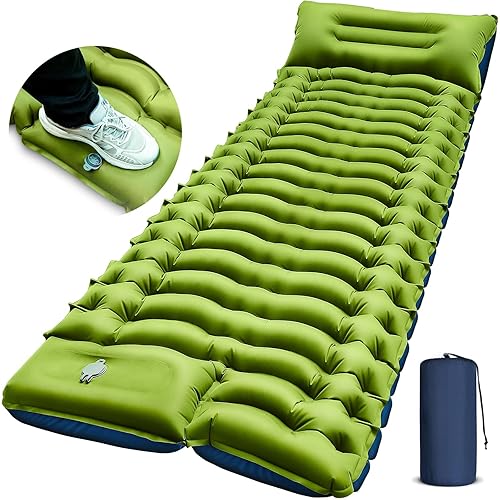 Best budget pickFUN PAC Camping Sleeping Pad, Ultralight Camping Mat with Pillow, BuilView on Amazon
- 5
 Best for side sleepersOGERY Self-Inflating Sleeping Pad, 3" Memory Foam Camping MattressView on Amazon
- 6
 Best for ultralight backpackingGear Doctors® Ether 17.5oz Ultralight Camping Sleeping Pad – Backpacking Air MattressView on Amazon
- 7
 Best for winter-leaning tripsGear Doctors® ApolloAir 5.2 R-Value [22oz] Ultralight Insulated InflatView on Amazon
Our Top Picks
The table below summarizes the seven options. The product sections that follow explain who each one suits and where it falls short.
Quick Comparison
| Product | Best for | Key feature |
|---|---|---|
| Elegear 4″ Thick Sleeping Pad (CumbreX) | Multi-season comfort | 4-inch thickness, 9 R-value rating |
| TREKOLOGY Ultra-Lightweight Sleeping Pad | Shoulder-season camping | 7.2 R-value, 4-inch loft |
| Pretyw Ultralight Camping Sleeping Pad | Car camping and casual trips | Built-in foot pump and pillow |
| FUN PAC Camping Sleeping Pad | Occasional campers on a tight budget | Built-in foot pump and pillow |
| OGERY Self-Inflating Sleeping Pad | Side sleepers wanting extra cushion | 3-inch memory foam core |
| Gear Doctors Ether Ultralight Camping Sleeping Pad | Weight-conscious backpackers | Very low packed weight |
| Gear Doctors ApolloAir 5.2 R-Value Insulated Pad | Cooler nights and winter-leaning trips | 5.2 R-value insulation |
Elegear 4″ Thick Sleeping Pad for Camping with 9 R-Value Insulated, Single | CumbreX Backpacking & Inflatable Camping Mattress
Elegear 4” Thick Sleeping Pad for Camping with 9 R-Value Insulated, Single | CumbreX™ Backpacking & Inflatable Camping Mattress, Ripstop & Waterproof, All Season Used, Lightweight for Hiking Tent
Best for: Multi-season comfort
This pad suits campers who want a thick, insulated surface for a range of conditions and who are willing to carry a bit more weight for better warmth and cushioning.
Key specs
- Thickness: 4 inches
- R-value: 9 (as listed by the manufacturer)
- Single-person sizing
- Ripstop, waterproof fabric shell
Pros
- The 4-inch loft gives a noticeably softer surface than thinner pads.
- The high listed R-value makes it a reasonable choice for cool nights.
- Ripstop fabric is designed to resist small punctures.
Cons
- Thicker pads take up more room in a pack.
- Heavier than ultralight models, which matters on long hikes.
Bottom line: A strong fit for car campers and hikers who prioritize comfort and warmth over pack weight.
View on AmazonTREKOLOGY Sleeping Pad for Camping– Ultra-Lightweight, 4″ Thick Camping Mat with 7.2 R-Value for All Seasons (Blue)
TREKOLOGY Sleeping Pad for Camping– Ultra-Lightweight, 4" Thick Camping Mat with 7.2 R-Value for All Seasons (Blue)
Best for: Shoulder-season camping
Campers who expect spring or fall nights in the 40s and 50s Fahrenheit and want a light pad without giving up much insulation will find this one practical.
Key specs
- Thickness: 4 inches
- R-value: 7.2 (as listed by the manufacturer)
- Ultralight construction
Pros
- Solid insulation for its weight class.
- The 4-inch loft adds comfort for side sleepers.
- Packs down compactly for backpacking.
Cons
- Not rated for deep winter conditions.
- Inflation takes more breath than self-inflating models.
Bottom line: Best for hikers who want balanced warmth and low weight across three seasons.
View on AmazonPretyw Ultralight Camping Sleeping Pad with Pillow & Built-in Foot Pump
Camping Mattress, Compact Inflatable Portable Mat for Camping, Backpacking, Hiking, Car Traveling, Beach, Tent, Single, Green Ultralight Camping Sleeping Pad with Pillow & Built-in Foot Pump
Best for: Car camping with built-in pump
This model is aimed at casual campers, beachgoers and anyone who wants the convenience of a pump and pillow without a dedicated pad-inflation routine.
Key specs
- Built-in foot pump
- Included pillow
- Single-person size
Pros
- The foot pump removes the need to bring a separate inflator.
- Pillow is included, which simplifies packing.
- Compact stored size for its category.
Cons
- Insulation is modest, so cold-weather use calls for an added layer.
- Foot pumps take a few minutes per inflation.
Bottom line: A convenient option for warm-weather car trips and general outdoor use.
View on AmazonFUN PAC Camping Sleeping Pad, Ultralight Camping Mat with Pillow, Built-in Foot Pump Inflatable Sleeping Pads
FUN PAC Camping Sleeping Pad, Ultralight Camping Mat with Pillow, Built-in Foot Pump Inflatable Sleeping Pads Compact for Camping Backpacking Hiking Traveling Tent,Single,Green
Best for: Best budget pick
Occasional campers and families outfitting several sleepers who want a functional pad without premium features will find this one sensible.
Key specs
- Built-in foot pump
- Included pillow
- Ultralight, compact design
Pros
- Practical feature set for the category.
- Easy to pack and carry.
- Built-in pump and pillow simplify setup.
Cons
- Not designed for cold-weather insulation.
- Fabric and valves may need more care over many seasons.
Bottom line: Good for weekend campers who value simplicity over technical specs.
View on AmazonOGERY Self-Inflating Sleeping Pad, 3″ Memory Foam Camping Mattress
Built-in Foot Pump, Insulated Foam, Memory Foam, Car Camping, Tent Camping, Backpacking, Compact Storage, 4-Season OGERY Self-Inflating Sleeping Pad, 3" Memory Foam Camping Mattress
Best for: Side sleepers wanting extra cushion
Campers who find thin pads uncomfortable on hips and shoulders often prefer a foam-core model like this one, especially for car camping.
Key specs
- Thickness: 3 inches
- Memory foam and insulated foam layers
- Built-in foot pump
- Labeled for 4-season use
Pros
- Memory foam adds pressure relief for side sleepers.
- Self-inflating design reduces manual effort.
- Insulated foam layer adds warmth.
Cons
- Heavier and bulkier than backpacking pads.
- Foam takes time to fully expand after rolling.
Bottom line: A comfort-first choice for car campers and side sleepers.
View on AmazonGear Doctors® Ether 17.5oz Ultralight Camping Sleeping Pad – Backpacking Air Mattress
Gear Doctors® Ether 17.5oz Ultralight Camping Sleeping Pad – Backpacking Air Mattress – Camping Mattress Pad – Compact Inflatable Sleeping Mat for Backpacking, Comfortable Outdoor Hiking, Tent, Travel
Best for: Ultralight backpacking
Backpackers counting every ounce, especially on multi-day routes, will find the low listed weight appealing.
Key specs
- Listed weight: 17.5 oz
- Compact inflatable design
Pros
- Very light for carrying on trails.
- Packs small in a stuff sack.
- Suitable for mixed backpacking and travel use.
Cons
- Thin profile offers less cushioning on hard ground.
- Ultralight fabrics require careful handling to avoid punctures.
Bottom line: Best for experienced backpackers prioritizing weight savings.
View on AmazonGear Doctors® ApolloAir 5.2 R-Value [22oz] Ultralight Insulated Inflatable Camping Sleeping Pad
Gear Doctors® ApolloAir 5.2 R-Value [22oz] Ultralight Insulated Inflatable Camping Sleeping Pad — Backpacking Sleeping Pad— Camping Mattress Compact Lightweight for Hiking—Air Mattress for Backpacking
Best for: Cooler nights and winter-leaning trips
Campers who expect nights below freezing but still want a pad that packs reasonably small will find the insulation rating useful.
Key specs
- R-value: 5.2 (as listed by the manufacturer)
- Listed weight: 22 oz
- Ultralight insulated inflatable construction
Pros
- Noticeably higher insulation than basic summer pads.
- Lightweight for an insulated model.
- Compact when packed.
Cons
- Thinner than the 4-inch models, which may feel firmer.
- Insulation alone will not replace a warm sleeping bag in deep cold.
Bottom line: A sound pick for campers who need warmth in cooler conditions without a heavy pad.
View on AmazonBuying Guide
Before you buy, check the factors below against the trips you actually take. Pad choice affects warmth, comfort and how much you carry, so it helps to decide on priorities first.
R-value and insulation
R-value measures resistance to heat flow from the ground into your body. Lower numbers suit summer camping, while higher numbers suit cold ground and shoulder or winter trips. The National Park Service encourages campers to match gear to expected overnight lows, and many manufacturers recommend pairing a pad with a sleeping bag rated for the same conditions. For a fuller explanation, see Sleeping Pad R-Value Explained: How Much Insulation You Need.
Good picks for this: Elegear 4″ Thick Sleeping Pad, Gear Doctors ApolloAir 5.2 R-Value Insulated Pad
Thickness and comfort
Thicker pads, typically around 3 to 4 inches, provide more cushioning for side sleepers and hips. Thinner pads save space and weight but can feel firm on hard ground. If you sleep on your side, Best Sleeping Pad for Side Sleepers: What to Look For (2026) covers the cushioning trade-offs in more depth.
Good picks for this: OGERY Self-Inflating Sleeping Pad, TREKOLOGY Ultra-Lightweight Sleeping Pad If you want more background, see 6 Best Floor Pads for Sleeping Options for Comfort on Hard Floors (2026).
Weight and packed size
If you hike with a pack, weight and packed volume matter more than almost any other spec. Ultralight pads can save a noticeable amount of load across a multi-day trip, but they often trade off durability and insulation. 6 Best Ultralight Camping Sleeping Pads for Backpacking (2026) compares lightweight options in more detail.
Good picks for this: Gear Doctors Ether Ultralight Camping Sleeping Pad, TREKOLOGY Ultra-Lightweight Sleeping Pad
Inflation method
Pads come in three main styles: fully inflatable (breath or pump), self-inflating (foam core that expands when valves open), and foam-only. Built-in foot pumps reduce effort but add some weight and bulk. For a comparison of how self-inflating designs work, see Self-Inflating Sleeping Pads: How They Work and How to Care for Them.
Good picks for this: Pretyw Ultralight Camping Sleeping Pad, OGERY Self-Inflating Sleeping Pad
Durability and puncture resistance
Check the fabric denier and whether the shell uses ripstop construction. Owners often report that ultralight shells are more prone to punctures on rocky or gritty ground, so a footprint or a tent groundsheet is a sensible addition. Repair kits and a leak-check routine can extend a pad’s life; see How to Find and Patch a Leak in an Air Sleeping Pad.
Good picks for this: Elegear 4″ Thick Sleeping Pad, FUN PAC Camping Sleeping Pad
Size and fit
Measure your height and typical sleeping position. Single-person pads are common, but some sleepers need extra length or width. Pads that are too short leave feet on cold ground, and narrow ones can roll off during the night.
Good picks for this: Gear Doctors ApolloAir 5.2 R-Value Insulated Pad, Pretyw Ultralight Camping Sleeping Pad
Care and storage
Store pads uncompressed or loosely rolled, and avoid leaving them rolled tight for long periods, which can compress insulation over time. Clean them with mild soap and water and let them dry fully before storage to prevent mildew. Manufacturers typically recommend checking the valve and seams before each trip.
Good picks for this: OGERY Self-Inflating Sleeping Pad, Elegear 4″ Thick Sleeping Pad
FAQ
What does a barkers rocks sleeping pad alternative need to have for winter?
For cold weather, look for a higher R-value, generally 5 or above, and pair the pad with a sleeping bag rated for the expected lows. Insulation from the pad matters most because the ground pulls heat away from your body.
Is a thicker pad always better?
Not always. Thicker pads feel more comfortable, but they add weight and bulk. For backpacking, a slimmer pad with good insulation often makes more sense. For car camping, thickness usually wins.
Do I need a separate pump?
Some pads include a built-in foot pump, while others need breath or a separate pump. If you want quick setup, a built-in pump is convenient. Otherwise, a compact pump can reduce the effort of inflating a large pad.
How do I prevent punctures?
Use a groundsheet or footprint under the pad, clear the sleeping area of sharp debris, and avoid inflating near open flames or sharp objects. Check for slow leaks before a trip by inflating the pad at home and waiting a few hours.
Can I use a camping pad for car camping and backpacking?
Yes, but the best choice depends on your priorities. A thick pad suits car camping, while a lightweight pad suits backpacking. Some mid-range models work for both if weight and comfort are balanced.
How long do these pads usually last?
Lifespan depends on use, storage and care. Owners often report that pads stored properly and repaired promptly can last many seasons. Heavy use on rough ground shortens life more quickly.
Should I consult a professional about cold-weather safety?
For winter expeditions or medical conditions affected by cold exposure, consult an outdoor-safety professional or your healthcare provider before heading out. Gear recommendations here are general and do not replace expert guidance.
Conclusion
For most campers, the Elegear 4″ Thick Sleeping Pad offers the most balanced mix of thickness and insulation. Backpackers counting ounces will lean toward the Gear Doctors Ether, while shoulder-season hikers may prefer the TREKOLOGY model. Car campers who want convenience can consider the Pretyw or FUN PAC options, and side sleepers may find the OGERY foam pad most comfortable. Cold-weather campers should prioritize the Gear Doctors ApolloAir 5.2. Match the pad to your trip type, expected temperatures and how you carry your gear, and pair it with a sleeping bag rated for the conditions you expect.
Sources
- Guidance on camping safety, site conditions and gear preparation for backcountry and campground stays (nps.gov)
- Consumer safety information on product recalls and safe use of outdoor equipment (cpsc.gov)
- Background on outdoor recreation land use and campground conditions that affect gear choice (usda.gov)
Related reading
About Audrey Hayes
Audrey Hayes is part of our editorial team and reviews and edits our camping equipment guides, checking product details against manufacturer specifications and owner feedback.







