
 By Audrey Hayes
Updated November 2026
Shopping for an ozark trail self-inflating sleeping pad usually comes down to three questions: how cold your nights will be, how much your pack can handle, and whether you sleep on your side or your back. This guide compares six self-inflating options we selected by specifications, brand reputation and patterns in owner feedback. We did not test these pads ourselves. Each pick is judged on stated R-value, thickness, packed size, inflation method and the kind of camping it suits best.
Our top picks at a glance
- 1
 TOP CHOICEBest overallTherm-a-Rest Trail Scout Self-Inflating Camping and Backpacking SleepiView on Amazon
- 2
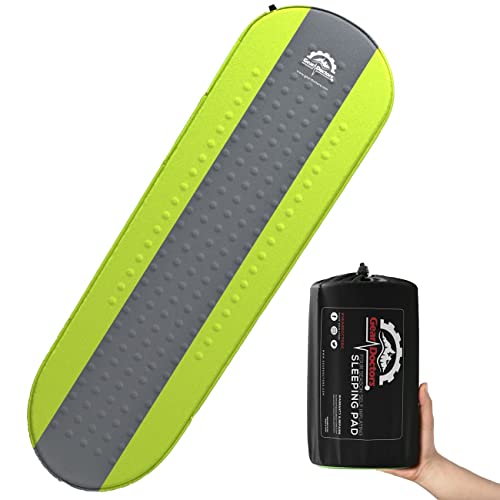 TOP CHOICEBest for cold-weather car campingGear Doctors® Oxylus 4.3 R-Value Insulated Air Foam Self Inflating Sleeping Pad CampingView on Amazon
- 3
 TOP CHOICEBest for a thick, cushioned sleepOGERY 3.15" Memory Foam Sleeping Pad, Self-Inflating with Electric PumView on Amazon
- 4
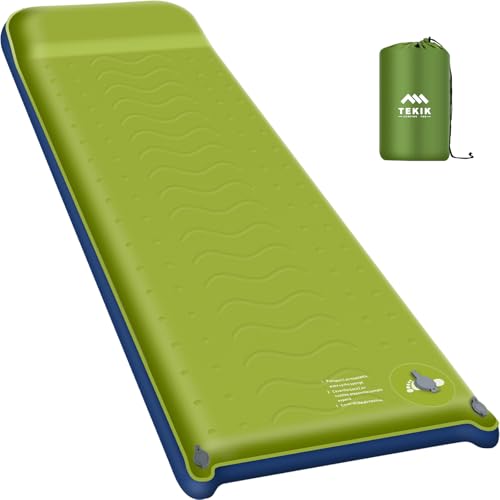 Best for a built-in pillow and fast inflationTEKIK Self Inflating Memory Foam Sleeping Pad with Pillow for CampingView on Amazon
- 5
 Best for a basic, budget-minded setupTherm-a-Rest Basecamp Self-Inflating Foam Camping Sleeping Pad, Regular – 20 x 72 InchesView on Amazon
- 6
 Best for cots, trucks and home guest useSelf Inflating Sleeping Pad with Electric Pump, 4" Ultra-Thick Foam SlView on Amazon
Our Top Picks
Quick Comparison
| Product | Best for | Key feature |
|---|---|---|
| Therm-a-Rest Trail Scout | Backpacking and general camping | Compact, established self-inflating design |
| TEKIK Self Inflating Memory Foam Pad | Side sleepers wanting a built-in pillow | Ultra-thick foam with fast inflate and deflate |
| OGERY 3.15″ Memory Foam Pad | Car camping and RV trips | 3.15-inch foam core with electric pump |
| Gear Doctors Oxylus 4.3 R-Value | Cool-weather camping | 4.3 R-value insulation |
| Therm-a-Rest Basecamp | Car and base camps | Thicker, heavier self-inflating foam pad |
| LLUAII Self Inflating Sleeping Pad | Cots, trucks and home use | 9.5 R-value with electric pump |
Therm-a-Rest Trail Scout Self-Inflating Camping and Backpacking Sleeping Pad, Regular – 72 x 20 Inches
Therm-a-Rest Trail Scout Self-Inflating Camping and Backpacking Sleeping Pad, Regular – 72 x 20 Inches
Best for: Backpacking and general camping with a balance of comfort and packability
This is a good fit for campers who want a well-known self-inflating pad that packs down small enough for a backpack. It suits three-season trips where you want reliable support without carrying a heavy pad.
Key specs
- Regular size: 72 x 20 inches
- Self-inflating foam core with open valve for quick inflation
- Designed for backpacking and camping use
Pros
- Packs compactly for its size
- Established brand with a long track record in sleeping pads
- Self-inflation reduces the effort needed at camp
Cons
- Thinner than the memory foam options on this list
- May feel firm for side sleepers on cold ground
Bottom line: A strong default choice for backpackers and weekend campers who want a dependable self-inflating pad without much bulk.
View on AmazonTEKIK Self Inflating Memory Foam Sleeping Pad with Pillow for Camping | Ultra-Thick Camping Mattress Pad, 20s Fast self Inflate&Deflate, 9.5 R-Value Insulated Self Inflating Sleeping Pad
TEKIK Self Inflating Memory Foam Sleeping Pad with Pillow for Camping | Ultra-Thick Camping Mattress Pad, 20s Fast self Inflate&Deflate, 9.5 R-Value Insulated Self Inflating Sleeping Pad
Best for: Campers who want a built-in pillow and a thick, cushioned surface
This pad suits side sleepers and anyone who finds thin pads uncomfortable on hips and shoulders. The listing emphasizes quick inflation and deflation, which helps when you are setting up or breaking camp in a hurry.
Key specs
- Ultra-thick memory foam construction
- Built-in pillow
- Listed 9.5 R-value for insulation
Pros
- Built-in pillow removes the need to pack one separately
- Thick foam provides noticeable cushioning
- Listed fast inflate and deflate times
Cons
- Thick foam adds bulk and weight to the pack
- Brand is less established than some competitors, so check return terms
Bottom line: Best for comfort-focused campers and side sleepers who car camp or plan shorter backpacking trips.
View on AmazonOGERY 3.15″ Memory Foam Sleeping Pad, Self-Inflating with Electric Pump | Ultra-Thick Camping Mattress with Built-in Pillow, 4 Season, Tent Use, Car Camping, RV Travel, Quiet Sleep
OGERY 3.15" Memory Foam Sleeping Pad, Self-Inflating with Electric Pump | Ultra-Thick Camping Mattress with Built-in Pillow, 4 Season, Tent Use, Car Camping, RV Travel, Quiet Sleep
Best for: Car camping, RV trips and anyone who values a thick, quiet surface
This pad is better suited to vehicle-based camping, where pack weight matters less than sleep comfort. The electric pump and thick foam make setup easier when you are not hiking in.
Key specs
- 3.15-inch memory foam thickness
- Self-inflating with electric pump
- Built-in pillow
Pros
- Thick profile for a cushioned sleep
- Electric pump reduces manual effort
- Built-in pillow included
Cons
- Bulky to carry on foot
- Electric pump requires a power source
Bottom line: A good match for car, RV and tent campers who prioritize comfort over packed size.
View on AmazonGear Doctors® Oxylus 4.3 R-Value Insulated Air Foam Self Inflating Sleeping Pad Camping
Gear Doctors® Oxylus 4.3 R-Value Insulated Air Foam Self Inflating Sleeping Pad Camping —Sleeping Pad Backpacking Air Mattress—Camping Mattress Self Inflating Camp Mat 4 Seasons Sleep Mat Compact Pack
Best for: Cool-weather camping where insulation matters as much as cushioning
The listed 4.3 R-value makes this a more relevant choice for spring and fall trips than pads aimed purely at summer use. It is designed as a compact camping pad rather than a heavy platform.
Key specs
- Listed R-value: 4.3
- Insulated air-foam self-inflating design
- Compact pack format
Pros
- Insulation rating suits cooler conditions
- Compact packed size for travel
- Works for multiple camping styles
Cons
- Less insulation than the 9.5 R-value options for deep winter
- Brand is less widely known, so compare warranty details
Bottom line: A sensible pick for shoulder-season campers who want more warmth than a summer pad provides.
View on AmazonTherm-a-Rest Basecamp Self-Inflating Foam Camping Sleeping Pad, Regular – 20 x 72 Inches
Therm-a-Rest Basecamp Self-Inflating Foam Camping Sleeping Pad, Regular – 20 x 72 Inches
Best for: Base camps, cabins and campers who want a durable, no-frills pad
The Basecamp line is built for stationary camping, where a heavier pad is acceptable. Owners commonly describe it as a sturdy option for regular use.
Key specs
- Regular size: 20 x 72 inches
- Self-inflating foam construction
Pros
- Durable foam construction for repeated use
- Simple inflate-and-go setup
- Established brand reputation
Cons
- Heavier and bulkier than backpacking pads
- Not ideal for long hikes
Bottom line: Choose this for stationary camping where durability matters more than weight.
View on AmazonLLUAII Self Inflating Sleeping Pad with Electric Pump, 4″ Ultra-Thick Foam Sleeping Mats for Camping with Built-in Pillow, 9.5 R-Value 4 Season Camping Mattress Pad for Cot Truck Car Home
Self Inflating Sleeping Pad with Electric Pump, 4" Ultra-Thick Foam Sleeping Mats for Camping with Built-in Pillow, 9.5 R-Value 4 Season Camping Mattress Pad for Cot Truck Car Home
Best for: Cots, truck beds and home guest use alongside camping
This is the most versatile pad here, with a listed 9.5 R-value and a 4-inch profile. It works for winter-rated camping and for indoor guest use.
Key specs
- Listed 4-inch foam thickness
- Listed 9.5 R-value
- Electric pump and built-in pillow
Pros
- High listed R-value for cold conditions
- Thick profile suits cots and truck beds
- Electric pump simplifies inflation
Cons
- Heavy and bulky for hiking
- Needs a power source for the pump
Bottom line: Best for campers who sleep in vehicles, on cots or in cold-weather setups where insulation is the priority.
View on AmazonBuying Guide
R-value and insulation
R-value measures resistance to heat flow from the ground. Lower numbers suit summer, while higher numbers suit winter. As a rough guide, many campers use lower-R pads in warm months and higher-R pads when temperatures drop near freezing. For more detail, see What R-Value for Sleeping Pad? 3-Season vs Winter Pads (2026).
Good picks for this: Gear Doctors Oxylus 4.3 R-Value, LLUAII Self Inflating Sleeping Pad
Thickness and comfort
Thicker pads generally feel softer, but they also weigh more and pack larger. If you are a side sleeper, a 3-inch or thicker profile often feels more comfortable than a thin pad. Our overview of Self-Inflating Sleeping Pads: How They Work and How to Care for Them explains how foam cores affect feel.
Good picks for this: OGERY 3.15″ Memory Foam Pad, TEKIK Self Inflating Memory Foam Pad
Packed size and weight
If you carry your gear on foot, check the packed dimensions and weight before buying. Self-inflating pads are generally bulkier than air pads. For a comparison of pad types, see Sleeping Pad or Air Mattress (2026): Which Is Better for Camping?.
Good picks for this: Therm-a-Rest Trail Scout, Gear Doctors Oxylus 4.3 R-Value
Size and fit
Measure your sleeping height and tent footprint. Regular pads are typically around 72 inches long and 20 inches wide, which may be short for taller campers. Check the listed dimensions before ordering.
Good picks for this: Therm-a-Rest Trail Scout, Therm-a-Rest Basecamp
Inflation method
Self-inflating pads open their valves and draw in air as the foam expands. Electric pumps and built-in pillows add convenience but also add dependence on power or extra parts. For inflation questions and general use, Is It Tips for Using Self Inflating Sleeping Pad? 6 Practical Tips covers common habits.
Good picks for this: OGERY 3.15″ Memory Foam Pad, LLUAII Self Inflating Sleeping Pad
Durability and repair
Look for puncture-resistant fabric and foam that keeps its shape after many uses. Small leaks are common in any pad, so knowing how to find and fix them extends the pad’s life. See How to Find and Patch a Leak in an Air Sleeping Pad.
Good picks for this: Therm-a-Rest Basecamp, Therm-a-Rest Trail Scout
Care and storage
Store the pad unrolled and dry, with the valve open, so the foam does not stay compressed. Avoid leaving it in direct sun or a hot vehicle for long periods. Clean it with mild soap and let it air dry completely before packing.
Good picks for this: TEKIK Self Inflating Memory Foam Pad, Therm-a-Rest Basecamp
FAQ
Is an ozark trail self-inflating sleeping pad the same as these models?
No. This list compares self-inflating pads generally, including popular and well-established models. If you are specifically considering an Ozark Trail pad, compare its listed R-value, thickness and packed size against the specs in this guide.
How long does a self-inflating pad take to inflate?
Most pads inflate within a few minutes when the valve is opened, though thicker foam takes longer. Listed fast-inflation claims vary by model, so check the manufacturer’s stated time.
What R-value do I need for camping?
Summer camping often works with a low R-value, while cold-weather camping calls for higher values. Check local overnight lows and match the pad’s rating to them. For a deeper breakdown, read Sleeping Pad R-Value Explained: How Much Insulation You Need.
Can I use a self-inflating pad in a truck bed or on a cot?
Yes, thick pads are commonly used in truck beds and on cots. Make sure the pad fits the platform and that the surface is level. See Truck Bed Sleeping Pad (2026): Which Should You Choose? and Cot vs Air Mattress vs Sleeping Pad for Camping.
How do I keep a self-inflating pad from losing air overnight?
Slow deflation often comes from a small leak or a valve that is not fully closed. Inflate the pad fully, check the valve seal, and test for leaks with soapy water if the pad keeps softening.
How should I clean a self-inflating pad?
Wipe the surface with a damp cloth and mild soap, rinse lightly, and air dry completely before storing. Never store the pad damp, since trapped moisture can lead to odor and mildew.
Do I need a pillow with a self-inflating pad?
Not always, but some models include a built-in pillow. If you prefer a separate pillow, a small inflatable or stuff-sack pillow works well alongside most pads.
Conclusion
For general camping, the Therm-a-Rest Trail Scout offers a balanced, compact option. Side sleepers and comfort-focused campers may prefer the TEKIK or OGERY memory foam pads. Shoulder-season and cold-weather campers should compare the Gear Doctors Oxylus 4.3 R-Value and the LLUAII 9.5 R-value model. Base campers and cot users may find the Therm-a-Rest Basecamp or LLUAII more practical. Match the R-value, thickness and packed size to your trip, and check manufacturer specifications before buying.
Sources
- Guidance on camping safety, campsite conditions and outdoor preparedness from the National Park Service (nps.gov)
- Information on cold-related illness and staying warm in low temperatures (cdc.gov)
- Standards information relevant to product testing and safety in outdoor equipment
About Audrey Hayes
Audrey Hayes is part of our editorial team and reviews and edits our camping equipment guides, checking product details against manufacturer specifications and owner feedback.







