
 By Audrey Hayes
Updated November 2026
Shopping for a battery powered stove camping setup can be confusing, because the phrase covers everything from compact emergency burners to full two-burner gas stoves that run on a small battery for ignition. This guide compares five products that fall into the camping stove category, grouped by how they are used: solo backpacking, car camping, and emergency kits. Each pick was assessed against the criteria below, using manufacturer specifications, brand reputation, and patterns in owner feedback.
Our top picks at a glance 5 Best Battery Powered Fans for Car Camping Picks Compared (2026) goes further into this.
- 1
 TOP CHOICEBest overallJoChef Portable Butane Camping Stove – 3-Year Warranty, Windshield & CView on Amazon
- 2
 TOP CHOICEBest for car campingODSD 2 Burner Camping Stove with Windshield, 20000 BTU Propane Camp StView on Amazon
- 3
 TOP CHOICEBest for backpackingAOTU Portable Camping Stoves Backpacking Stove with Piezo Ignition StaView on Amazon
- 4
 Best for wood-fire fansSierra Stove Wood Camping/Backpacking Stove Boil 1 qt of water in onlyView on Amazon
- 5
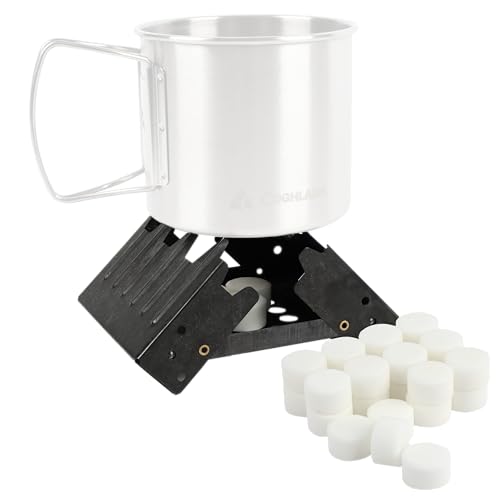 Best budget pickCoghlan's Emergency Stove – Lightweight, Portable Camping Stove for BaView on Amazon
Selection criteria: fuel type and whether a battery is needed for ignition, burner output in BTU where stated, weight and packed size, stability on uneven ground, wind resistance, and how well each model suits a particular group size. We also considered warranty coverage and how often owners mention ignition problems or fuel supply issues.
Our Top Picks
Quick Comparison
| Product | Best for | Key feature |
|---|---|---|
| JoChef Portable Butane Camping Stove | General camping and road trips | Auto ignition with a brass burner and windshield |
| ODSD 2 Burner Camping Stove | Car camping groups | Two burners rated at 20000 BTU with a carry bag |
| AOTU Portable Camping Stoves Backpacking Stove | Solo backpacking | Piezo ignition and wind resistance |
| Sierra Stove Wood Camping/Backpacking Stove | Users who want no fuel canister | Burns wood or twigs for a fast boil |
| Coghlan’s Emergency Stove | Emergency kits and light packing | Foldable design with fuel tablets included |
JoChef Portable Butane Camping Stove – 3-Year Warranty, Windshield & Case | Powerful Brass Burner | CSA Certified | Auto ignition | Single burner | Camping, tailgating, road trips & emergencies
JoChef Portable Butane Camping Stove – 3-Year Warranty, Windshield & Case | Powerful Brass Burner | CSA Certified | Auto ignition | Single burner | Camping, tailgating, road trips & emergencies
Best for: General camping, tailgating, and road trips where one burner is enough
This is a single-burner butane stove suited to a solo camper or a couple who cook simple meals. It uses an auto-ignition feature, so the battery or spark mechanism is the main electrical element, which makes it a practical fit for the battery powered stove camping category.
Key specs
- Single burner with a brass burner head
- Auto ignition
- Includes a windshield and carry case
- Manufacturer lists a 3-year warranty and CSA certification
Pros
- Windshield helps the flame hold up in light breeze
- Auto ignition removes the need for matches
- Carry case keeps the unit clean in a vehicle
Cons
- Single burner limits cooking for larger groups
- Butane output can drop in cold weather
Bottom line: A strong all-round choice for one or two people who want reliable ignition and a warranty without the bulk of a two-burner unit.
View on Amazon
ODSD 2 Burner Camping Stove with Windshield, 20000 BTU Propane Camp Stove, Portable Folding Gas Stove, Camping Essentials Gear Includes Frying Pan, Coffee Stand & Carry Bag, Green
ODSD 2 Burner Camping Stove with Windshield, 20000 BTU Propane Camp Stove, Portable Folding Gas Stove, Camping Essentials Gear Includes Frying Pan, Coffee Stand & Carry Bag, Green
Best for: Car camping groups that need to cook several dishes at once
Two burners give you room to run a pot and a pan together, which is useful for families or small groups at a campsite with a vehicle nearby. The gas-based design is paired with a battery-free burner system in most configurations, but owners should confirm ignition details on the listing.
Key specs
- Two burners
- Rated at 20000 BTU in the listing
- Includes windshield, frying pan, coffee stand and carry bag
Pros
- Two burners allow multi-dish meals
- Windshield improves flame stability
- Included accessories reduce extra purchases
Cons
- Heavier and bulkier than single-burner models
- Not suited to ultralight backpacking
Bottom line: Best for car campers who value cooking space over portability.
View on Amazon
AOTU Portable Camping Stoves Backpacking Stove with Piezo Ignition Stable Support Wind-Resistance Camp Stove for Outdoor Camping Hiking Cooking
AOTU Portable Camping Stoves Backpacking Stove with Piezo Ignition Stable Support Wind-Resistance Camp Stove for Outdoor Camping Hiking Cooking
Best for: Solo backpacking where weight and wind matter
This compact stove uses a piezo igniter, so no battery is strictly needed for lighting. It is designed for trail use, where a small footprint and stable pot support matter more than raw output.
Key specs
- Piezo ignition
- Compact backpacking form factor
- Stable pot supports and wind-resistant design per the listing
Pros
- Piezo ignition works without matches or batteries
- Small enough for a daypack
- Wind-resistant design suits exposed sites
Cons
- Boil times are slower in cold or windy conditions
- Pot stability is best with lighter cookware
Bottom line: A sensible pick for one person who wants a lightweight stove that lights reliably on the trail.
View on Amazon
Sierra Stove Wood Camping/Backpacking Stove Boil 1 qt of water in only 4 Min.
Sierra Stove Wood Camping/Backpacking Stove Boil 1 qt of water in only 4 Min.
Best for: Campers who want to avoid carrying fuel canisters
A wood-burning stove runs on twigs and small sticks, so it removes the fuel canister from your pack entirely. It fits users who expect to find dry fuel at their campsite and who accept a little more tending.
Key specs
- Wood-burning design for camping and backpacking
- Manufacturer states it can boil 1 quart of water in about 4 minutes
Pros
- No fuel canister to carry or dispose of
- Fast boil time per the manufacturer
- Works in areas where canisters are restricted
Cons
- Needs dry fuel, which can be scarce after rain
- Produces soot and requires cleaning
Bottom line: Good for experienced campers who plan around fuel availability and do not mind feeding a fire.
View on Amazon
Coghlan's Emergency Stove – Lightweight, Portable Camping Stove for Backpacking, Survival, and Outdoor Cooking – Foldable Design with 24 Fuel Tablets Included (Compact for Travel and Storage)
Coghlan's Emergency Stove – Lightweight, Portable Camping Stove for Backpacking, Survival, and Outdoor Cooking – Foldable Design with 24 Fuel Tablets Included (Compact for Travel and Storage)
Best for: Emergency kits and minimal packing
This foldable stove is built for emergencies and light trips rather than extended cooking. It uses solid fuel tablets, which means no battery and no pressurized canister, making it simple to store in a vehicle or go bag.
Key specs
- Lightweight foldable design
- Includes 24 fuel tablets according to the listing name
Pros
- Very compact when folded
- Fuel tablets are included
- Simple operation with no ignition parts to fail
Cons
- Limited heat output for full meals
- Fuel tablets are a recurring cost once used up
Bottom line: Best as a backup or emergency stove rather than a primary camp kitchen.
View on AmazonBuying Guide
Fuel type and ignition
Battery-assisted or piezo ignition removes the need for matches, but it does not change how the stove burns. Check whether the unit runs on butane, propane, wood, or solid fuel, and whether the ignition relies on a battery that needs replacing. Batteries lose charge in cold weather, so a piezo igniter is a useful backup.
Good picks for this: JoChef Portable Butane Camping Stove, AOTU Portable Camping Stoves Backpacking Stove
Burner output and BTU rating
Output is usually stated in BTU per hour. Higher numbers boil water faster, but they also burn fuel faster. For a two-person meal, a single burner in the mid range is often sufficient. Compare stated ratings only between stoves of the same fuel type.
Good picks for this: ODSD 2 Burner Camping Stove, JoChef Portable Butane Camping Stove
Size, weight and packed dimensions
For backpacking, aim for a stove that packs small enough to fit inside a cook pot. For car camping, weight matters less, and a two-burner layout is practical. Measure the stove when folded and check that it fits your storage space.
Good picks for this: AOTU Portable Camping Stoves Backpacking Stove, Coghlan’s Emergency Stove
Wind resistance and stability
Wind is the main cause of slow boils. Look for a windshield or a burner design that shields the flame, and check that pot supports are wide enough for your cookware. Uneven ground makes stability more important, so test the stove on a flat surface before you pack it.
Good picks for this: JoChef Portable Butane Camping Stove, AOTU Portable Camping Stoves Backpacking Stove
Use case and group size
Match the stove to how you camp. Solo hikers can manage with one small burner, while families need more cooking surface. If you cook for a group, a two-burner model reduces waiting time between courses.
Good picks for this: ODSD 2 Burner Camping Stove, Sierra Stove Wood Camping/Backpacking Stove
Durability and warranty
Check the material of the burner and the stated warranty period. Brass burner heads are often mentioned by owners as holding up well, though long-term durability depends on how the unit is stored and cleaned.
Good picks for this: JoChef Portable Butane Camping Stove, Coghlan’s Emergency Stove
Care, cleaning and storage
Wood-burning stoves accumulate soot, while gas stoves need checks on fuel seals and burner jets. Store canisters upright and away from heat sources, and keep the stove dry before packing it to prevent corrosion.
Good picks for this: Sierra Stove Wood Camping/Backpacking Stove, ODSD 2 Burner Camping Stove
FAQ
Do battery powered camping stoves need a battery to cook?
Usually no. Most camping stoves burn fuel such as butane, propane or wood, and the battery, if present, typically only powers the ignition spark. You can still light the stove with a match or lighter if the battery runs flat.
Is a battery powered stove for camping safe to use in a tent?
No. Camping stoves should never be used inside a tent or enclosed vehicle because of carbon monoxide and fire risk. Cook outdoors in a ventilated area and keep the stove on a stable, level surface.
Which fuel works best in cold weather?
Butane performs poorly below freezing because the canister pressure drops. Propane handles cold better, and wood or solid fuel is unaffected by temperature but depends on finding dry material. For more detail, see our related guide on propane and butane performance.
How much water can a small backpacking stove boil?
This depends on the burner output, wind and starting water temperature. Manufacturers often state boil times for one liter or one quart, and actual times in wind or cold will be longer than the listed figure.
Can I use a two-burner stove for backpacking?
Two-burner stoves are generally too heavy and bulky for backpacking. They suit car camping, where weight is less important than cooking surface.
How do I keep my camp stove working in wind?
Use a windshield, position the stove behind a natural windbreak without blocking ventilation, and keep the pot close to the flame. Avoid placing the stove on a surface that will be damaged by heat.
For safety-specific questions about fuel storage or indoor use, consult the manufacturer’s manual or a qualified outdoor safety professional.
Conclusion
For most campers, the JoChef Portable Butane Camping Stove is a sensible all-round choice, with auto ignition and a windshield. Car campers cooking for a group will get more from the ODSD 2 Burner Camping Stove, while solo backpackers should consider the AOTU Portable Camping Stoves Backpacking Stove. Those who want to avoid carrying fuel can look at the Sierra Stove Wood Camping/Backpacking Stove, and the Coghlan’s Emergency Stove suits emergency kits. Match the stove to your group size, fuel availability and how much weight you are willing to carry.
Sources
- Consumer safety guidance on fuel-burning appliances and carbon monoxide hazards (cpsc.gov)
- Background on propane and fuel properties relevant to outdoor cooking (energy.gov)
- Campfire and stove use rules and fire safety guidance for public campgrounds (nps.gov)
Related reading
- Solar Powered Stove for Camping vs Propane Stove: Which Should You Choose?
- Battery Operated Camping Stove (2026): Which Should You Choose?
- 6 Best Battery Powered Fans for Tent Camping in 2026
- 6 Best Battery Powered Coolers for Camping Trips in 2026
- Winter Camping Cooking: Stoves, Fuel and Water in the Cold
About Audrey Hayes
Audrey Hayes is part of our editorial team and reviews and edits our camping equipment guides, checking product details against manufacturer specifications and owner feedback.








