Choosing the right gear bag depends on how you camp, how you pack your car, and how far you will carry the load. This guide covers the main bag types, the features that matter most, and the simple habits that keep bags usable trip after trip despite sand, dust, and damp mornings. The goal is a set of bags that load quickly, stay organized, and protect your gear.
What gear bags and duffels are for
Gear bags are the middle layer between loose gear and your vehicle. Instead of balancing tent poles, tarps, sleeping bags, chairs, and stove parts directly on the cargo floor, you group them in bags you can lift, slide, and stack. A well-chosen set of camping gear bags makes loading faster, keeps dirty items separate from clean ones, and protects soft gear from sharp corners.
This type of bag suits car campers, families, and group trips where convenience matters more than pack weight. If you walk only a short distance from the parking spot to the tent, a heavier bag with generous padding and comfortable handles is a fair trade. Backpackers need something different: light, compressible sacks that fit inside a backpack. For that reason, the rest of this guide focuses on gear bags built for vehicle-based camping.
Main types and how they differ
Manufacturers offer many shapes, but most camping gear bags fall into a few families. The table below summarizes what each is good for and where it falls short.
| Type | Best for | Trade-offs |
|---|---|---|
| Duffel | Clothes, sleeping bags, and general gear that needs a big opening | Top-loading designs can hide items at the bottom; soft sides need care when stacked |
| Wheeled duffel | Heavy loads on paved paths, flat campgrounds, and travel between car and site | Wheels and frame add weight; wheels struggle on sand and rough trails |
| Tote-style hauler | Camp kitchens, bulky gear, and items you want to grab without unzipping | Wide profile takes up car space; short handles limit how far you want to carry it |
| Tent and chair bags | Long poles, tent fabric, chairs, and other awkward shapes | Bulky in the car; must match the length of the item |
Within those families, the details matter more than the name. A duffel with a zipper that opens along three sides, for example, behaves differently from one with a small top opening. Keep reading for the specific features to compare.
Duffels
A classic duffel is a soft, cylindrical or rectangular bag with a single large opening and carrying handles. Duffels are the most flexible choice because they compress when partially empty and can squeeze into odd spaces in the trunk. Look for a wide U-shaped opening that lets you see everything inside, and at least one durable handle on each end so two people can lift a heavy load together.
Wheeled duffels
Wheeled duffels pair a conventional duffel body with two wheels, a telescoping handle, and a flat or reinforced base. They are a good choice if you regularly carry heavy loads over pavement, such as from a parking lot to a campsite along a paved loop. The trade-off is that wheels and frames add weight and take up room, and a wheeled bag is nearly useless in deep sand, on rocky paths, or when you need to set it down on uneven ground.
Tote-style gear haulers
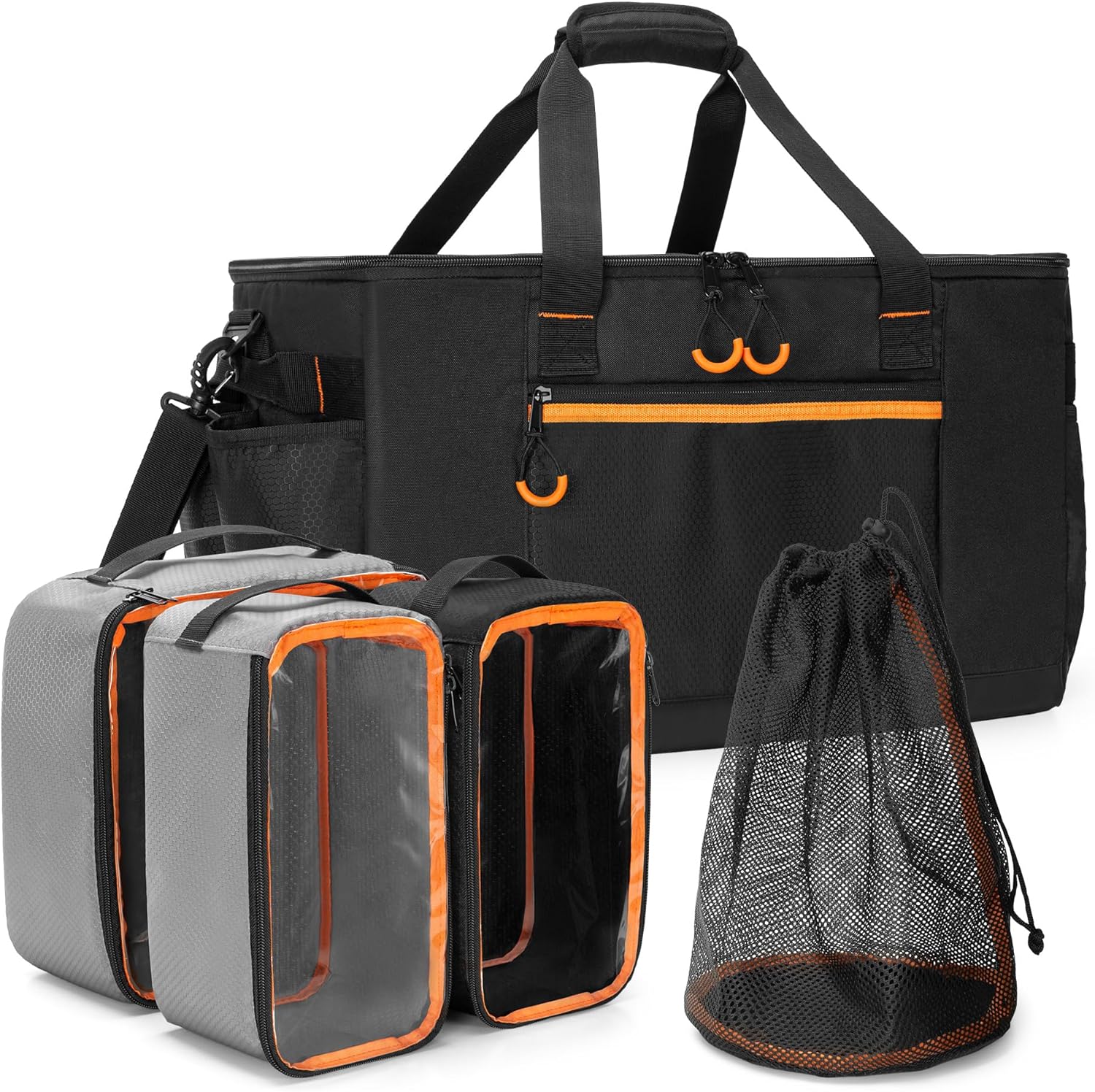
Tote-style haulers are open or zippered bags with a wide mouth and short handles, closer in shape to a shopping tote than a traditional duffel. They shine for camp kitchens and bulky items that you want to grab without digging. Many fold flat when empty, which makes them easy to stash behind a seat. When you need a wide-mouth hauler for pots, utensils, and other camp kitchen gear, gear totes are a natural fit.
Tent and chair bags
Tent and chair bags are long, often cylindrical sleeves made to hold items that do not fit in a duffel. A tent bag keeps the folded fabric and poles together and prevents pole ends from poking through other gear. A chair bag does the same for camp chairs, usually with a shoulder strap for hands-free carrying. Before you buy one, check the packed length of your tent or chair against the internal length of the bag; a bag that is too short is worse than no bag at all.
Features that actually matter
The most expensive bag is not always the best one for your vehicle and campsite. These are the features to compare before you buy.
Water resistance
Most gear bags are water-resistant, not waterproof. They shed light rain and damp cargo floors, but they are not designed to survive hours of heavy rain. A waterproof duffel uses a sealed or roll-top closure and taped seams, and it is the right tool when sleeping bags, clothes, or electronics live in the bag. If you want a heavy-duty option that keeps contents dry in sustained rain, waterproof duffels are worth the trade in weight and bulk. For items that must stay completely dry no matter what, a dedicated dry bag is the better tool; see our guide on how to choose a dry bag for the differences.
Fabric and seams
Look for heavy coated nylon, polyester with a weather-resistant coating, or a tough tarpaulin-style material. Coatings applied to the inside of the fabric resist abrasion better because the outside surface stays plain. Seams matter just as much as fabric: taped and sealed seams keep water from seeping in, while simple stitched seams let moisture through even on so-called water-resistant bags. Also check the zipper. A heavy zipper with a large pull is easier to grip with cold hands or gloves, and it is far less likely to jam when sand gets worked into the teeth.
Handles and straps
Handles and straps decide how a bag feels when it is full. A single small handle might be fine for a lightweight bag, but a loaded duffel needs at least one sturdy handle at each end and a detachable shoulder strap that spans the length of the bag. A padded shoulder strap helps when the load gets heavy, and a non-slip surface keeps it from sliding off your shoulder. Some duffels include backpack straps, which free your hands while you carry a lantern, water jug, or a child’s pack. Compression straps on the sides or top are useful because they pull the load tight and reduce the bag’s profile once it is packed into the car.
Opening and internal organization
A bag with a U-shaped opening unzips across the top and down both sides, letting you see and reach everything. A bag with only a small opening forces you to fish around in the dark. Internal organization is a matter of taste: some campers want a few mesh pockets for headlamps and cords, while others prefer a plain open bag they can load to the brim. A small slot or loop for a luggage tag makes labeling easier, which helps when every bag looks the same. For camp kitchens and small loose items, separate pouches or organizers often work better than pockets sewn into the duffel; see our guide to camp kitchen and small item organizers for ideas.
Sizing, fit and compatibility
Sizing a gear bag is really about fitting a bag into your car, not about matching a number on a spec sheet. Before buying, compare the packed dimensions of the bag with the cargo area you actually use: length, width, and height with the rear seats in the position you keep them during a camping trip. If you have to load the bag through a rear door or hatch, pay attention to the opening itself, not just the floor of the cargo area.
Long tent and chair bags create the most common fit problem. A pole bag that fits easily on a flat floor may not clear the curved opening of a hatchback or SUV, and a wheeled duffel, with its frame and handle, can be longer than the plain fabric version. When you measure, include the wheels and handle in the total length.
Weight distribution matters too. Put the heaviest items low and close to the center of the car, and use tie-down points or cargo straps to keep bags from sliding. Flexible duffels can be packed around rigid totes and coolers, which helps you fill gaps that a square bin cannot fill. A common rule of thumb is to carry one large duffel for your biggest soft item and a few smaller bags for categories like bedding, clothes, and footwear, rather than one monster bag that becomes impossible to lift.
Common buying mistakes
- Buying one enormous bag for everything. A single giant duffel gets heavy fast, is awkward to carry, and forces you to unpack the entire bag to reach the bottom.
- Ignoring water resistance. Sleeping bags and clothes packed in a plain woven bag can get damp from morning dew, rain, or a wet trunk floor. Match the bag to the contents.
- Not checking the car opening. A bag that fits the cargo floor can still refuse to pass through the door or hatch. Always measure the opening too.
- Choosing weak or poorly placed handles. A heavy bag with one small handle is miserable to lift; look for handles on both ends and a comfortable shoulder strap.
- Overlooking zipper quality and opening shape. A stiff zipper with a small pull is hard to use in cold weather, and a narrow opening makes a large bag frustrating to pack.
- Forgetting labels. When every bag looks the same, someone will have to unzip everything at the campsite. Labeling saves time before you even leave the driveway.
Care, cleaning and upkeep
Sand and dirt are unavoidable, so plan for a simple cleaning routine. After every trip, empty each bag completely and shake it out in both directions. Use a stiff brush or a vacuum to remove sand from the interior and the zipper tracks. For surface dirt, wipe with a damp cloth and a little mild soap, then leave the bag open to dry completely before folding or storing.
Never store a damp bag. Moisture encourages mildew on both fabric and zippers, and a wet bag can develop a musty odor that transfers to your gear on the next trip. If a bag does get soiled or mildewed, follow the manufacturer’s cleaning instructions; some coated fabrics cannot tolerate high heat, bleach, or harsh detergents. When in doubt, check the label or the manufacturer’s website.
Zippers also need attention. Sand is abrasive, so keep grit out of the tracks and rinse any sand that collects there. Avoid forcing a zipper that is stuck; find and clear the obstruction instead. Store bags loosely, not fully compressed, and keep them in a dry place where moisture and rodents are less likely to find them. Inside the house, a set of fabric duffels can be stacked on a shelf, while heavy hard-sided items often do better in clear bins. For that kind of organization, see our guide to organizing camping gear in storage bins.
FAQ
Should I choose a wheeled duffel or a regular duffel?
It depends on how far you carry it and what the ground looks like. Wheeled duffels work well on pavement, flat camping loops, and paths without big steps. Choose a regular duffel if you regularly cross sand, gravel, grass, or uneven trails, because wheels sink and catch, and the added frame makes the bag heavier to carry.
Are camping gear bags waterproof?
Most are water-resistant, not waterproof. They handle light rain and splashes, but water can enter through zippers and stitched seams. If you need a bag that keeps contents dry in heavy rain, look for a waterproof duffel with a roll-top or sealed closure, or use a dry bag inside the duffel for the gear that must stay dry.
What is the best way to get sand out of a duffel?
Empty the bag, then shake it out in both directions, including inside pockets and zipper tracks. Vacuum or brush the fabric if needed, wipe with a damp cloth for stuck-on dirt, and dry the bag fully with the zipper open before storing. Follow the manufacturer’s instructions when you use soap or spot cleaners.
How do I make it easier to find gear in the car?
Label every bag with its contents and give each person or category a consistent place in the car. Use tags, luggage labels, or a piece of tape written on with a marker. Keep a simple list of what goes where so loading and unloading follow the same routine every trip.
There is no single perfect gear bag; there is only the one that fits your car, your campsite, and the way you pack. Choose bags with durable fabric, comfortable handles, and an opening you can actually use, keep them labeled, and clean them when you get home. Those habits will make loading easier, your gear easier to find, and every trip start with less frustration.