Some links on this page are affiliate links. If you buy through them, we may earn a commission at no extra cost to you. As an Amazon Associate I earn from qualifying purchases. Learn more ›
Best Bivy Sacks
Compare the best bivy sacks by listing specs, from waterproof-breathable shells to mylar emergency bags, then check each listing for current details.
This post contains Amazon affiliate links. As an Amazon Associate I earn from qualifying purchases, at no extra cost to you.
A bivy sack is a single-person shelter that goes over a sleeping bag or directly over the sleeper, adding a layer against wind, rain and ground moisture with little or no setup. The best bivy sacks for a given trip depend on whether you need a lightweight backpacking shell, a compact emergency bag for a vehicle or day-pack kit, or a fuller cold-weather sleep system.
The products below were chosen by comparing listing specifications and features, not by hands-on testing. We have not used these items. Check each listing for current price, availability and full details before you buy.
The AquaQuest Pharaoh is a 1.1 lb waterproof-breathable bivy sack made from 70D nylon with a 10,000 mm waterproof rating and an elasticated drawstring hood for storm protection. It suits solo backpackers and minimalist campers who want a low-bulk shelter that protects a sleeping bag and pad in rain and wind.
Pros & Cons
Pros
Very lightweight and compact for fast-and-light trips
Waterproof-breathable fabric helps manage internal moisture better than basic tarps or plastic bivy shells
Dual YKK zippers on both sides provide convenient access and ventilation options
Adds a meaningful layer of warmth to a sleeping bag in cold conditions
Cons
Breathability can be limited in warm, humid conditions, so condensation may still build up inside
Offers no interior living space, so it is not suited to changing clothes or sheltering with gear
Mummy-shaped fit can feel snug for users who prefer more elbow room or sleep in wider bags
Detailed Review
The AquaQuest Pharaoh is a minimalist waterproof-breathable bivy sack designed to wrap around a sleeping bag and pad. It is aimed at solo backpackers, bikepackers, and hikers who want weather protection without the weight or setup time of a tent.
Its standout feature is the combination of a 10,000 mm waterproof rating and a 10,000 g/m2/day breathability rating, which helps keep rain out while letting body moisture escape. The elasticated drawstring hood can be cinched tightly in wind and rain, and dual YKK zippers on both sides make it easy to enter and exit.
Built from 70D nylon, the Pharaoh feels durable for its weight and packs down into its own integrated stuff sack measuring 9 by 5 inches. At 1.1 lbs, it is light enough to carry on long days, and the stuff sack keeps it organized in a pack.
The main drawbacks are limited breathability in hot, humid environments and a snug mummy shape that some sleepers may find restrictive. There is also no interior living space, so it works best as a sleeping gear shell rather than a full shelter.
For solo users who want a lightweight, low-bulk way to protect their sleep system from weather, the Pharaoh is a practical choice. Its lifetime warranty and responsive customer service add confidence to the purchase.
The Zmoon Emergency Sleeping Bag is a lightweight, waterproof mylar bivy sack that expands to 78 by 47 inches and reflects up to 95% of body heat. It suits hikers, campers, and anyone building a bug out bag who wants an affordable, compact cold-weather backup.
Pros & Cons
Pros
Very lightweight at about 4 ounces, making it easy to carry on long hikes
Strong value for a two-pack with an 18-month warranty
Versatile enough for camping, emergency kits, and extended outdoor trips
Consistently praised by a large base of customers with a 4.6 out of 5 rating
Cons
Mylar material is thin and can tear or crinkle loudly, so it is not built for repeated heavy use
Insulation relies on reflecting body heat, so it offers limited warmth in extreme cold without additional layers
Temperature rating of 6 to 15 degrees Celsius is modest, so it is better as a backup than a primary winter bag
Detailed Review
The Zmoon Emergency Sleeping Bag is a compact mylar bivy sack designed for campers, hikers, and anyone assembling a bug out or emergency kit. It expands to 78 by 47 inches, giving adults up to roughly 180 cm tall room to lie down, and it can also work for children.
Its standout feature is the mylar foil construction, which reflects up to 95% of body heat back toward you. The material is waterproof, windproof, and breathable, so it shields you from rain, wind, and snow while helping you stay warm and dry in harsh conditions.
Build quality is practical rather than premium. The mylar feels thin and will crinkle when you move, and it is not designed to withstand rough handling or repeated folding over many seasons. The bag also has no buckle or closure, so it depends on how well you wrap yourself in it.
The main drawback is warmth. With a 6 to 15 degree Celsius rating, it works best as an emergency layer or a supplement to a real sleeping bag rather than a primary shelter in deep winter. Pairing it with insulating layers will improve results considerably.
For the price, the two-pack offers excellent value for anyone who wants a dependable, ultra-light backup. It is an easy recommendation for emergency kits, car kits, and casual campers, but serious winter campers should treat it as a supplement rather than a replacement.
The GOTIMEGEAR Life Bivy is an ultralight polyethylene emergency bivy sack that doubles as a thermal blanket and sleeping bag liner, weighing just 4.1 ounces. It suits hikers, campers, and drivers who want a compact survival item for a go bag or vehicle kit, though it is a single-use emergency shelter rather than a comfortable everyday sleeping bag.
Pros & Cons
Pros
Extremely lightweight and compact, easy to carry everywhere
Retains body heat effectively for an inexpensive emergency item
Includes useful survival extras like a loud whistle and paracord
Highly rated by a large base of customers, indicating consistent satisfaction
Cons
Thin polyethylene material tears easily and is not designed for repeated, long-term use
Offers limited comfort and insulation compared to a conventional sleeping bag
Single-piece design is not suited to extended camping trips or harsh, prolonged conditions
Detailed Review
The GOTIMEGEAR Life Bivy is a compact emergency sleeping bag and bivy sack made from polyethylene. It is aimed at hikers, campers, travelers, and anyone who wants a backup survival item in a bag or vehicle.
Its standout feature is its heat retention, which the manufacturer rates at up to 90% of body heat. Weighing only 4.1 ounces, it can be tucked into almost any pack, and the included 120-decibel whistle and 20-foot paracord add practical value for signaling and improvised repairs.
The build is simple and functional. The polyethylene shell feels light and reflective, though it is thin and can puncture or tear with rough handling, so it is best treated as a one-time emergency tool rather than a long-term shelter.
The main drawback is comfort. Like most emergency bivies, it offers little insulation beyond reflecting body heat, and it can feel clammy inside over extended use. It is not a substitute for a proper sleeping bag on multi-day trips.
Overall, this is an inexpensive, highly rated addition to any survival kit. It earns its place in a go bag or glove box, and it is a sensible choice for anyone who wants reliable emergency warmth without the bulk.
The Preboun Emergency Sleeping Bag is a 50-pack of waterproof polyethylene bivy sacks measuring about 84 by 36 inches, designed to shield one adult from rain, wind, snow, and condensation. It suits emergency kit stocking, group preparedness, disaster supply planning, and charitable donation programs rather than long-term backcountry camping.
Pros & Cons
Pros
Excellent value per unit when purchased as a 50-piece bulk set
Lightweight, pull-on design makes it quick to deploy in urgent situations
Highly rated by buyers at 4.6 out of 5 stars
Useful for donation programs assisting people experiencing homelessness
Cons
Thin PE material is not as warm or durable as insulated or nylon-shell sleeping bags for extended wilderness trips
Packaging is bulky and the total set weighs about 13.7 pounds, so storage space is needed
Limited ventilation may cause condensation build-up during prolonged use
Detailed Review
The Preboun Emergency Sleeping Bag is a bulk set of 50 waterproof polyethylene bivy sacks built for emergency preparedness. Each bag is roughly 84 by 36 inches and is intended for one adult, making it a practical choice for families, disaster kits, workplaces, and community donation efforts.
Its standout quality is weather protection. The PE shell blocks rain, wind, and snow, while the interior is designed to reflect around 90% of body heat, which helps maintain warmth in cold conditions. The bags also double as emergency blankets, ground covers, or makeshift shelters, adding flexibility to any outdoor or survival kit.
Build quality is adequate for its intended role. The material is described as tear and puncture resistant, and the wide taped seams are reinforced for longer use. Each bag ships in a transparent pouch that can be repacked, which keeps storage organized, though the full 50-piece set is considerably bulky and weighs about 13.7 pounds.
The main drawback is that polyethylene is thin compared with traditional insulated sleeping bags, so it will not match the comfort or breathability of a proper camping bag on extended trips. Condensation can also build up inside during long use, and the pull-on design offers limited adjustability.
Overall, this set delivers strong value for anyone needing emergency shelter supplies in quantity. Buyers seeking a cost-effective stockpile or donation option will find it useful, while serious backpackers should consider a dedicated insulated sleeping bag instead.
The MT Army Modular Sleeping Bag System is a four-piece, military-style setup with a patrol bag, an intermediate bag, a seam-taped waterproof bivy cover, and a compression stuff sack. Its layering flexibility stands out, letting you use each bag alone or stack them for cold-weather camping, hunting, or emergency kits.
Pros & Cons
Pros
Layering flexibility covers a wide range of temperatures in one kit
Included bivy cover adds real weather protection that many budget bags lack
Durable ripstop nylon and sturdy hardware suit outdoor and field use
Compressible design makes it practical to store in a vehicle or pack for trips
Strong overall customer rating reflects good satisfaction with the system
Cons
The listed temperature rating field reads 'to_40_degrees,' which conflicts with the 50°F to -50°F system claim, so buyers should confirm the rating for their needs
At about 6 pounds and a bulky packed size, it is heavier than lightweight backpacking bags
Comfort depends heavily on clothing, sleeping pad, and personal tolerance, so a quality pad is needed to reach the rated warmth
Detailed Review
The MT Army Modular Sleeping Bag System is a four-piece, military-style sleep kit built for cold-weather camping, hunting camps, and emergency preparedness. It includes a patrol bag, an intermediate cold-weather bag, a seam-taped waterproof bivy cover, and a compression stuff sack. It suits buyers who want one versatile system rather than a single bag for a single season.
The standout feature is layering. Used alone, the patrol bag or intermediate bag handles milder nights, while combining both with the bivy cover extends the system toward very low temperatures. The bivy cover guards against wind, rain, snow, and ground moisture, which is valuable when sleeping outdoors without a tent.
Build quality reflects its field-oriented design. The ripstop nylon shell, Polarguard HV insulation, heavy-duty zippers, and adjustable drawcords are chosen for repeated use in rough conditions. The mummy shape and compression sack help the system pack down for vehicle kits or a backpack, though the set is heavy at about 6 pounds.
The main drawbacks are the inconsistent temperature field in the listing and the bulk of the kit. Warmth also depends heavily on the sleeping pad and clothing you bring, so this should be paired with an insulated pad for best results. Buyers expecting an ultralight backpacking bag will find better options elsewhere.
Overall, this is a practical and affordable layered system for hunters, campers, and anyone building an emergency kit. It is not U.S. military-issued surplus, but it delivers the modular warmth and weather protection that make it worth considering for winter and all-season use.
This USGI GEAR 4-piece modular sleep system includes a Patrol bag, an Intermediate Cold Weather bag, a waterproof bivy cover, and a compression stuff sack, built from 210T nylon ripstop with DWR coating. It suits hunters, campers, and outdoor users who want layerable cold-weather gear that can be used piece by piece or combined.
Pros & Cons
Pros
Modular design lets you adjust warmth by layering the bags and bivy as conditions change
Waterproof bivy cover adds meaningful protection against wind, rain, and ground moisture
Rugged ripstop construction and YKK zippers suit demanding outdoor and tactical use
Solid 4.7 out of 5 customer rating points to good satisfaction with its build and performance
Cons
The mummy cut and 86-inch length can feel restrictive for taller users or those who move a lot in their sleep
Polyester fill is bulkier and less compressible than down, so the packed system takes more space than a comparable down setup
The advertised 50 degrees F to -50 degrees F range is an extreme rating, so real-world warmth at the low end will depend on layering, a sleeping pad, and clothing
Detailed Review
The USGI GEAR Military Sleeping Bag System is a four-piece modular sleep kit built for cold-weather camping, hunting, and tactical use. It combines a Patrol sleeping bag, an Intermediate Cold Weather sleeping bag, a waterproof bivy cover, and a compression stuff sack in Woodland Camo. It is best suited to outdoor users who want a rugged system they can adjust for changing conditions.
The standout feature is flexibility. You can use each layer alone for milder nights or combine the bags and bivy for severe cold. The triple-laminated bivy cover adds meaningful wind and moisture protection, which is useful when sleeping on damp ground or in open terrain.
Build quality is a clear strength. The 210T nylon ripstop shell with DWR coating resists tears and sheds light moisture, while YKK zippers, hook and loop closures, and elastic drawstrings help the bags seal tightly. The mummy shape keeps warmth close to the body, and the compression stuff sack keeps the full kit manageable for transport.
The drawbacks are mainly fit and packed size. The mummy cut is snug, and the 86-inch length may feel confining for taller sleepers or restless sleepers. Polyester fill is also bulkier than down, so the kit takes up more room in a pack, and the extreme temperature rating should be treated as a best-case figure that depends on accessories and layering.
Overall, this is a well-built, versatile cold-weather system that delivers strong value for its category. It is a good choice for hunters, campers, and emergency preparedness users who prioritize durability and modular warmth over packed size and roomy comfort.
This NovaMedic emergency bivy sack is an 84 x 36 inch reflective Mylar sleeping bag that folds small enough for a glove box or backpack. It suits campers, hikers, and drivers who want an inexpensive backup for unexpected cold, wind, or rain, but it is not a substitute for a true insulated sleeping bag.
Pros & Cons
Pros
Very affordable way to add emergency warmth and shelter to a kit
Packs down small and weighs very little, so it is easy to carry everywhere
Bright orange color improves visibility in roadside and outdoor emergencies
Highly rated by buyers for everyday emergency preparedness use
Cons
Mylar is a reflective barrier, not insulation, so it cannot replace a rated sleeping bag in extreme cold
Listing details are inconsistent, with some fields showing a pack of 5 while the included components specify 2 bags, so confirm the quantity before ordering
Thin material can tear or puncture easily and is generally designed for single emergency use, and the product carries no warranty
Detailed Review
The NovaMedic Emergency Sleeping Bag is a thin, reflective Mylar bivy sack designed to be carried in a pack, vehicle, or emergency kit for unplanned situations. It is aimed at campers, hikers, travelers, and households building a disaster preparedness supply, rather than at anyone seeking a comfortable overnight sleeping system.
Its standout quality is how much it packs into so little space and weight. At roughly 16 ounces and 84 x 36 inches when unfolded, it offers full-body coverage that can help hold in body heat and block wind and light rain during a stranded or waiting situation.
The polyethylene and Mylar construction feels light and fairly durable for its price class, and the bright orange exterior is useful for signaling your location. Seams and the zipper closure are functional, though the material is not built for repeated rugged use and can tear if handled roughly on sharp rock or brush.
The main drawback is that Mylar reflects heat rather than generating it, so this product works best as a supplement to proper layers and insulation. The temperature rating is listed as extreme, which overstates what a single-layer emergency blanket can realistically deliver, and the listing has inconsistent pack quantity information.
For the price, this is a practical, low-cost addition to emergency kits, glove boxes, and backpacks. Buy it as a backup shelter and warmth layer, not as your primary sleeping bag, and it will serve well when something goes wrong.
The Survival Frog Tact Bivvy 2.0 is a 4.8-ounce, waterproof emergency sleeping bag made from HeatEcho reflective film that reflects up to 90% of body heat and packs into a palm-sized stuff sack. It suits hikers, campers, and preppers who want a light backup shelter for a bug out bag, car kit, or glovebox.
Pros & Cons
Pros
Extremely lightweight and compact, making it easy to carry in any pack or vehicle.
Waterproof and windproof design protects against rain, wind, and damp ground.
Includes useful extras like a whistle, carabiner, and fire-starting paracord at a budget-friendly price point.
Bright orange color improves visibility for rescue teams.
Cons
Thin reflective film is not a substitute for a true insulated sleeping bag in severe cold, and warmth depends on pairing it with other layers.
Limited durability for repeated heavy use compared with nylon or ripstop bivy sacks, so it is best kept as an emergency item.
Product data lists a vague thermal resistance value, so buyers seeking specific warmth ratings should check with the manufacturer.
Detailed Review
The Survival Frog Tact Bivvy 2.0 is an emergency bivy sack designed for people who need a lightweight shelter that fits in a pocket of a pack. It is built for hikers, campers, and preppers who want a backup layer in a bug out bag, car emergency kit, or day pack rather than a primary sleeping bag. At 4.8 ounces, it is easy to carry without thinking about it.
Its HeatEcho reflective film is the main draw, reflecting heat back to the body and cutting down wind chill. The material is fully waterproof and windproof, and the reinforced taped seams help block rain and cold air during a rough night outdoors. The bright orange shell also makes the wearer easier to find, which matters in open terrain or after a crash.
Build quality is practical for an item at this price and weight. The paracord drawstring is a thoughtful touch, since it can tie down gear or serve as a fire starter through its exposed tinder cord. The included whistle and carabiner round out the kit so the item works as a complete emergency package.
The drawbacks are mostly tied to its design. The film is thin, so it should be used as a layer over clothing or inside a sleeping bag rather than as a standalone shelter in freezing weather. It is also less durable than heavier bivy sacks, so frequent rough use may shorten its life.
Overall, the Survival Frog Tact Bivvy 2.0 is a sensible, low-cost addition to any emergency kit. It is not built for serious winter camping, but it delivers reliable waterproof protection, extra warmth, and useful survival extras in a package that is easy to keep on hand.
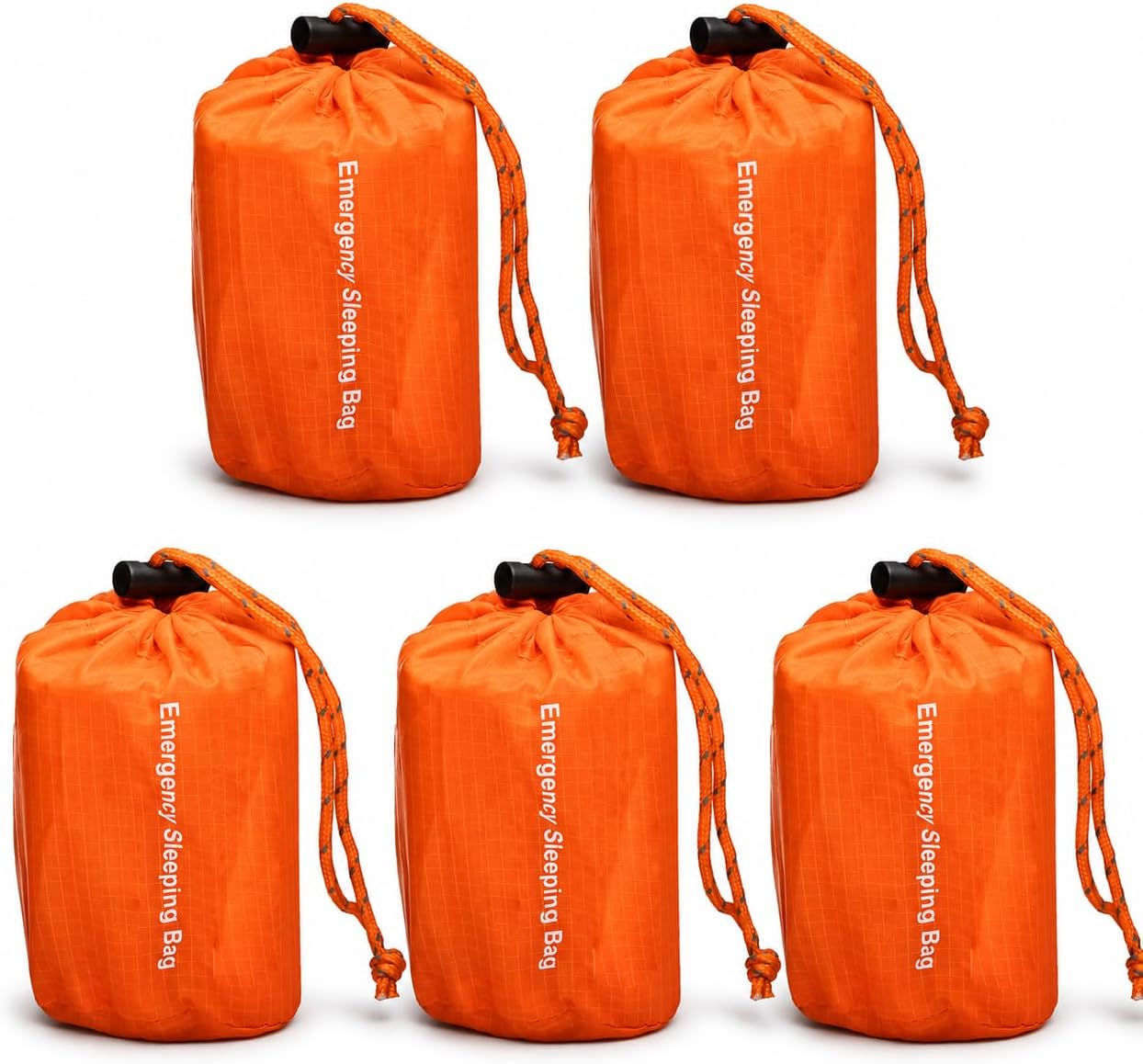
The Qunclay 24-Set Emergency Sleeping Bag is a bulk pack of 24 orange foil bivy sacks, each with a ripstop nylon pouch and a whistle, suited for emergency kits, group outings, or donation supplies. Its standout quality is its bulk value and compact packing, making it best for families, hiking teams, and community organizations rather than serious backcountry campers seeking premium insulation.
Pros & Cons
Pros
Excellent value for buying in bulk for groups, families, or donation drives
Compact pouch makes it easy to store in vehicles, backpacks, and emergency kits
Bright orange color improves visibility in emergency situations
Includes whistle and pouch, so each set is ready to use or gift right away
Cons
Thin foil film offers limited insulation compared to a true sleeping bag and is best for temporary use
Foil material can tear or crinkle loudly and is not durable for repeated, long-term use
At 6.6 pounds for the full set, the bundle is heavier than the individual sacks suggest, and the rating of 4.1 stars reflects mixed experiences with build quality
Detailed Review
The Qunclay 24-Set Emergency Sleeping Bag is a bulk emergency kit built around a single-use style survival bivy sack. Each of the 24 units includes an aluminum foil film bivy, a ripstop nylon drawstring pouch, and a whistle, which makes it a practical choice for families, hiking groups, and community organizations.
Each bivy opens to about 82.7 by 35.4 inches and folds into a small 5.91 by 3.35 inch pouch, so it fits easily in a glovebox, daypack, or camping emergency kit. The hooded design wraps around the body to help retain heat, and the reflective foil helps block wind and moisture for short periods of exposure.
The bright orange exterior is a genuine advantage in emergencies, since it stands out against woods, snow, and roadside backgrounds. The ripstop nylon pouches keep each unit organized and protected, and the included whistle adds a useful signaling tool at no extra cost.
The main drawback is that the foil film is thin and crinkly, so it provides far less insulation than a conventional sleeping bag and will not hold up to repeated rough use. Some buyers may also find the set heavier than expected for its size, and the average rating suggests that occasional quality inconsistencies have been reported.
Overall, this is a sensible, budget-friendly option for stocking emergency kits, winter care packages, or charity donations. Serious backcountry users should pair it with a proper sleeping system, but for temporary warmth and bulk preparedness, it delivers solid value.
The Sierra Designs Backcountry Bivy is an ultralight, minimalist shelter built from waterproof/breathable 20D nylon ripstop, designed to fit the brand's Backcountry Bed and a 2.5-inch inflatable pad. It suits solo backpackers, bikepackers, and mountaineers who want a lightweight, weather-resistant sleep system with a mesh panel for warm-weather ventilation.
Pros & Cons
Pros
Very lightweight and compact for its weather protection, ideal for fast-and-light trips
Waterproof top fabric with breathable construction helps reduce clammy feeling inside
Easy entry and exit through the large U-shaped side zip
Mesh window and guy line loop add versatility for warm weather and better headroom
Cons
Single-occupancy design offers limited elbow room and is not suited to two sleepers
Mummy shape and a 77-inch maximum height recommendation may feel tight for taller users
Bivy-style shelter offers less protection from wind and insects than a full tent, and condensation can build up in humid conditions
Detailed Review
The Sierra Designs Backcountry Bivy is a minimalist, single-person bivy sack built for backpackers, bikepackers, and mountaineers who want shelter without the weight of a tent. It is designed to work as part of the brand's Backcountry Bed system, with room inside for a 2.5-inch inflatable pad.
Its standout feature is the combination of a waterproof/breathable 20D nylon ripstop top fabric and a mesh window for ventilation. The large U-shaped side zip makes getting in and out simple, even when you are tired at the end of a long day. The guy line loop lifts the peak height, which helps with headroom and reduces the feeling of being pressed against the fabric.
Build quality is practical and focused on weight savings. The lightweight 20D top fabric is paired with a more durable 30D nylon ripstop bottom, treated with DWR and rated flame-resistant. At 16 ounces, it packs down small and carries easily, though the thin materials call for careful handling around sharp rocks and abrasive surfaces.
The main drawbacks come from its single-occupancy, mummy-shaped design. Sleepers who prefer more elbow room or taller users may find the 77-inch recommended height limiting. As with most bivy shelters, condensation can build up in humid conditions, and it offers less wind and bug protection than a full tent.
Overall, this is a well-engineered choice for solo fast-and-light trips where weight and weather protection matter most. Buyers who need a roomier or multi-person shelter should look elsewhere, but for minimalist backcountry sleeping, it delivers reliable performance.
Bivy Sack Buying Guide
Waterproof and Breathable Shell Ratings
Shell ratings are often the first thing to compare on a backpacking bivy. The AquaQuest Pharaoh bivy sack (AquaQuest Pharaoh bivy sack) lists a waterproof rating of 10,000 mm and a moisture vapor transmission rating of 10,000 g/m²/day. Those two numbers measure different things: the first describes resistance to water coming in, and the second describes how much vapor can move out. Reading both gives a fuller picture than either one alone.
The Sierra Designs Backcountry bivy bag (Sierra Designs Backcountry bivy bag) takes a different approach to comfort. Its listing describes a waterproof/breathable top fabric, a mesh window panel for ventilation in good weather, and a guy line loop to increase peak height. Those features suggest a design meant to be used with an open or partly open panel when conditions allow. The listing also says it is designed to fit the manufacturer’s Backcountry Bed and sleeping pad, so check fit against your own pad before you buy.
Materials: Nylon, Mylar and Polyethylene Films
Bivy sacks in this group use three broad families of material. Nylon shells, such as the one on the Pharaoh, are more typical of backpacking bivies. Mylar and polyethylene emergency bags are lighter and fold very small. The SurvivalFrog Tact Bivvy (Survival Frog Tact Bivvy) is made from a reflective polyester film that the listing calls HeatEcho. Its listing states that the material reflects 90% of body heat, is windproof and waterproof, and has reinforced taped seams.
Thin reflective films are not the same as woven fabrics. They tear more easily than nylon, and the listings for these bags describe them as emergency items rather than long-term camping shelters. Pay attention to the terms used in each listing, such as “tear resistant” or “tear and puncture resistant,” and avoid assuming those claims apply equally to every film.
Size, Height Limits and Packed Size
Fit matters more than most people expect. The Pharaoh’s listing says it fits users up to 6 feet 6 inches tall and provides zipper access on both sides. It packs into a built-in cylindrical stuff sack listed at 9 inches long by 5 inches in diameter. The Sierra Designs bag lists a maximum height recommendation of 77 inches and a size of 80 by 36 inches. The Preboun emergency bag (Preboun emergency sleeping bag) lists a length of about 84 inches and a width of about 36 inches, which the listing describes as enough room for most adults.
Check whether the listing gives a maximum height recommendation. When it is missing, the listing does not say, and you should confirm dimensions with the seller or manufacturer before relying on the bag for an overnight trip.
Closures, Weight and Accessories
Closure type changes how quickly you can get in and out. The Pharaoh lists dual YKK zippers and an elasticated drawstring hood. The Zmoon emergency bag (Zmoon emergency sleeping bag) has no buckle and is listed at 78 by 47 inches and 4 ounces. The Go Time Gear Life Bivy (Go Time Gear Life Bivy) lists a weight of 4.1 ounces and comes with a 120-decibel whistle and 20 feet of paracord.
Accessories are worth reading closely, because they can add items you may not need. The Survival Frog bag includes a carabiner and whistle on the end of its drawstring, and its drawstring is listed as paracord that can also serve as tinder.
Sleep Systems and Layered Cold-Weather Options
Some people want a layered system rather than a single shell. The MT Army modular system (MT Army modular sleeping bag system) lists four pieces: a patrol bag, an intermediate cold-weather bag, a waterproof bivy cover and a compression stuff sack. Its listing gives a system temperature range from 50°F to -50°F when the layers are combined and notes that actual comfort depends on clothing, sleeping pad, weather and personal tolerance.
The USGI Gear modular system (USGI Gear modular sleeping bag system) has a similar layout and lists the same 50°F to -50°F range. Its listing describes 210T nylon ripstop fabric with a DWR coating, heavy-duty YKK zippers and a triple-laminated bivy cover. Because layered systems are heavier and bulkier than emergency films, they suit trips where the forecast is cold and the pack has room.
Final Thoughts
For a lightweight backpacking shell with a stated waterproof rating and a packed size that fits a small pack, the Pharaoh (AquaQuest Pharaoh bivy sack) and the Sierra Designs Backcountry bivy (Sierra Designs Backcountry bivy bag) are the two listings to compare first. Both list nylon construction and a single-person shape, and the Sierra Designs bag adds a mesh window for ventilation in good weather.
For emergency kits, the mylar and film options are easier to store in a vehicle or day pack. The Go Time Gear Life Bivy (Go Time Gear Life Bivy) and the Survival Frog Tact Bivvy (Survival Frog Tact Bivvy) both list a whistle, and the Survival Frog bag adds a carabiner. Larger sets, such as the Qunclay 24-piece set (Qunclay emergency bivy set), are listed as multi-pack options, so check the count and contents in the listing before ordering.
Frequently Asked Questions
Is a bivy sack the same as a tent?
No. A bivy sack is a single-person cover with little or no internal space for gear, while a tent provides a larger shelter with poles or structure. Many backpackers use a bivy for minimal setups or as an extra layer over a sleeping bag. The Tent, Tarp, Bivy or Hammock guide covers how these shelters compare.
Are mylar emergency bivy bags reusable?
Some listings say they can be reused. The Zmoon bag’s listing says you can reuse it if you want, and the Survival Frog listing describes a compact stuff sack for repeated carry. Reuse depends on how the film holds up to folding and use, so inspect the bag after each use and follow the listing’s care notes.
Can children use these bivy sacks?
The Zmoon listing says its emergency bag is suitable for adults and children. Other listings describe their bags for adults. For child use, follow the manufacturer’s instructions and talk with a pediatric professional about cold-weather needs for your child.
Do I still need a sleeping pad with a bivy sack?
A sleeping pad is still important for insulation from the ground. The MT Army listing notes that comfort depends on the sleeping pad, clothing and weather, and the Sierra Designs listing says the bag is designed to fit its matching pad. Plan your pad choice alongside the bivy. For broader planning, see the guide to building a backpacking sleep system.
A complete winter camping gear checklist for car campers. Learn what changes in your shelter, sleep system, clothing, kitchen, and safety kit when temperatures drop below freezing.
A complete checklist of camping gear for a car campsite trip, grouped by category with essentials and nice-to-have items, plus tips for weather and group size.
Tents, tarps, bivy sacks and hammocks each trade weight, weather protection, bug defense and setup ease differently. This guide compares them so you can match a shelter to your trails, seasons and comfort.
Compare the best foldable camping chair with canopy options by shade coverage, weight limit, packed size and setup time to find the right fit for your trips.
Compare the best mac sports double camping chair options for two. See key specs, pros, cons and how to pick the right seat for your campsite and needs.
Compare the best inflatable chair for camping by comfort, weight, packed size and load rating. Find the right pick for car camping, backpacking or long stays.
Learn what separates a high end camping chair from a standard one, including frame materials, weight capacity, seat height and packed size, so you buy with conf
Looking for a high chair camping chair? Compare 8 tall camp chairs by seat height, weight capacity and packed size to find the right fit for your camp.