Planning a family camp kitchen starts with food you pack at home and ends with a clean campsite. The goal is to keep everyone fed, keep hands washed, and keep food at a safe temperature from the first breakfast to the last snack. With a basic two-burner stove, a well-packed cooler, and simple routines, you can handle most outdoor meals without stress.
Plan Family Meals Before You Leave Home
Make a menu for every breakfast, lunch, dinner, and snack. Keep it simple: one-pot dinners, sandwiches, and vegetables you can eat raw or cook quickly. For each meal, write down the ingredients you need to pack and the cooking tools required. This becomes your packing list and helps you avoid buying duplicates at a camp store.
Prepare what you can at home. Chop vegetables, marinate meat, pre-cook rice or pasta, mix pancake dry ingredients in a jar, and portion snacks into reusable bags. Prepping at home means less time at camp and fewer dishes. It also keeps raw foods contained in your kitchen rather than on the camp table.
If this is your first trip or your checklist feels incomplete, use a family camping equipment list as a starting point. A written menu tells you exactly which pots, utensils, and food storage containers to bring.
Choose a Camp Kitchen Setup That Fits Your Group
A two-burner stove gives you one burner for the main dish and another for a side, a pot of water for hot drinks, or a quick pan of eggs. Look for a stove with a stable base and some wind protection, and always use it outdoors on a level surface. Never use a fuel-burning stove, grill, or lantern inside a tent, vestibule, camper, or vehicle because of carbon monoxide and fire risk. Follow the manufacturer instructions for fueling, lighting, and cleaning the stove.
Cooler capacity is measured in quarts, but the usable space matters more than the number on the label. Think about how many meals you plan to prepare: a cooler that fits the size of your food containers and can sit on a tailgate or camp table is easier than an oversized model you have to lift. Consider camping coolers with a sturdy latch and handles that work for the way you carry gear. A separate drinks cooler helps, because the drink cooler gets opened all day and the food cooler stays colder when its lid stays closed.
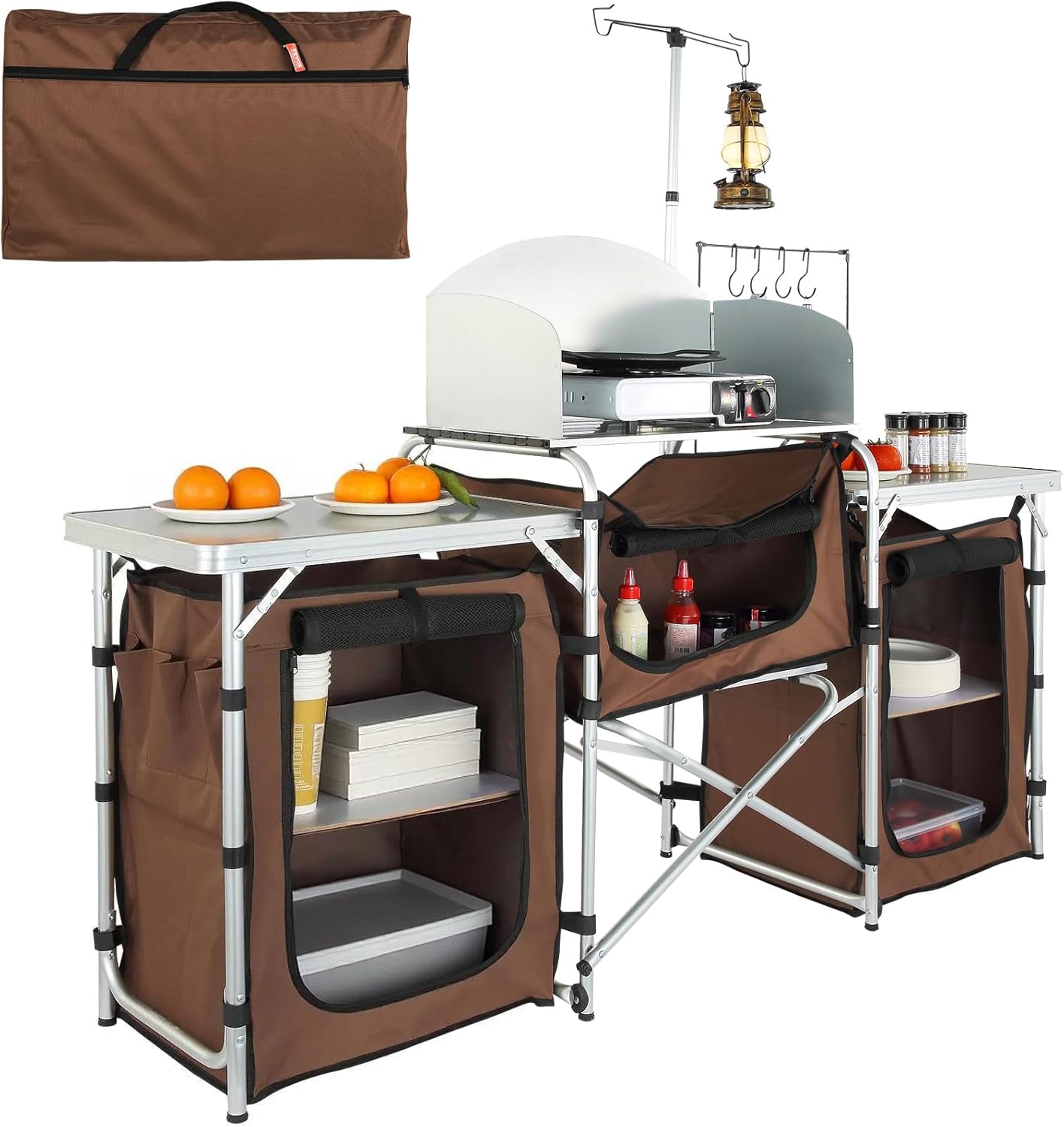
For the actual kitchen layout, bring a stable table, a cutting board, a folding wash basin, a dish towel, and a few storage totes. Keep a handwashing station near the cooking area: a jug of water, a small basin, soap, and a clean towel.
Step-by-Step Kitchen and Meal Plan
Follow a simple daily rhythm so everyone knows what happens next. The night before, check the next day’s menu and pull the needed food from the cooler. In the morning, set up the stove, the table, and the handwashing station before you start cooking. After each meal, follow the cleanup routine so food does not sit out.
- Write a menu and save it on your phone or on a card in the food bin.
- Prep ingredients at home and label them by meal.
- Pack the food cooler so the first meal is easy to reach and raw meat stays sealed on the bottom.
- Set up the kitchen in one area: stove, table, wash basin, trash bag, and handwashing station.
- Cook with the stove outside and keep a pan lid nearby to smother a small pan fire; never use water on a grease fire.
- After eating, separate leftovers and return them to the cooler, then wash and dry the dishes and store all food and scented items according to the campground rules.
Use a meal plan that matches your cooking style. This sample table can help you see what to do at home and what to do at camp.
| Meal | Prep at Home | Cook at Camp |
|---|---|---|
| Breakfast | Pre-mix pancake dry ingredients and pack fruit | Add water, pour onto a greased skillet, serve with fruit |
| Lunch | Wash and slice vegetables, portion hummus or nut butter | Build wraps or sandwiches at the camp table |
| Dinner | Chop vegetables and pre-cook rice at home | Sauté vegetables and protein in a single skillet, stir in rice |
| Snack | Pack trail mix, fruit, and crackers in individual bags | No cooking needed |
Assign Kid-Friendly Tasks Away from Heat
Kids can help with meals without getting near the stove or sharp knives. Establish a clear rule that the area around the cooktop is off-limits unless an adult says otherwise. For younger children, keep them at least an arm’s length from the flames and hot pots.
Good tasks include washing produce, assembling wraps or sandwiches, setting out plates and cups, putting napkins in holders, squeezing condiments, sorting trash and recyclables, and wiping the camp table. Older kids can carry water for the wash basin, hand out utensils with tongs, or help organize the food cooler. For more ideas, look through camping gear for kids to find tools that make tasks easier and safer.
Have kids wash their hands before handling food and again after touching raw meat, pets, dirt, or shared surfaces. Show them how to use a paper towel or clean cloth to turn off the faucet and open cooler lids, especially while cooking.
Manage Cooler Temperature and Food Safety
Keep cold food at or below 40°F all the time. Use a thermometer inside the cooler to check the temperature, especially during warm weather. Pack the cooler with blocks of ice or frozen water bottles on both the bottom and the top, and store raw meat in a leak-proof container on the bottom so its juices cannot touch prepared food.
Open the cooler only when you need something, and put perishable food back inside as soon as everyone has been served. Avoid leaving milk, eggs, meat, or cut produce on the camp table for hours. If you have any doubt about whether a perishable item has stayed cold enough, throw it out. This is one area where being conservative is the best habit.
Wash hands with soap and water before cooking and after touching raw meat. If you are in a place without running water, use a portable hand sanitizer that is at least 60% alcohol, but remember that handwashing is safer when your hands are visibly dirty. Use separate cutting boards for raw meat and ready-to-eat food to reduce contamination.
Set Up a Clean-Up System
A clean-up routine prevents clutter and keeps food away from bugs and animals. Set up three basins in a convenient spot: one for washing, one for rinsing, and one for sanitizing. Use warm water and a small amount of biodegradable soap in the first basin, plain water in the second, and a few drops of camp-safe sanitizer in the third. A family camp kitchen setup can be as simple as a folding table with three stackable tubs.
Collect a dish kit with a scrubber, a scraper, a dish towel, and a drying rack. Scrape food scraps into a bag before washing. Let dishes air-dry on a clean rack whenever possible, and hang towels where they can dry in the sun. Strain food scraps out of the wash water and pack them out with your trash unless the campground says otherwise.
Empty the wash basin away from streams, lakes, and campsites only if that is allowed in the area. Many campgrounds require you to dispose of wastewater in a designated dump station or pack it out. Check the local rules and carry a large sealed container for used wash water if needed.
Keep Food Safe from Wildlife
Wildlife food storage rules vary by campground and season. Check the campground or land manager rules before you pack, and follow any bear box, locker, or vehicle storage requirements. Do not assume you can keep food in a tent, including in a closed backpack or a cooler. Stoves, dishes, scented soap, toothpaste, and food wrappers also count as scented items and should be stored the same way.
Keep food away from your sleeping area and cook downwind of where you sleep. In areas with bears, use the provided metal lockers whenever they are available, or follow the local protocol for hanging food. If a campground allows food in a locked vehicle, make sure the food is not visible from outside and the vehicle is completely closed.
Never leave food on the table while you take a hike or go to bed. After every meal, collect trash, scrape plates, and store all food. If you drop food on the ground, pick it up immediately so animals do not learn to visit your camp.
Common Mistakes
One of the biggest mistakes is cooking inside a tent or a camper shell. Even with a rainy day, a fuel-burning stove inside an enclosed space can cause carbon monoxide poisoning. Instead, cook under a canopy or use the campground’s covered kitchen area, and follow any local fire restrictions.
Another mistake is overloading the cooler with food you will not use. Extra perishables take up space, warm up quickly, and become waste. Stick to your menu and bring nonperishable snacks for backup.
People also forget to separate raw meat from other foods. Place sealed raw meat in a container on the bottom of the cooler, and use a different cutting board and tongs for raw meat than for vegetables. Finally, do not start cooking a complicated meal when the whole group is hungry. Build a simple no-cook snack into the day so everyone can eat while you finish the hot meal.
Troubleshooting
If the stove flame is low or uneven, check the fuel level and the connection, and clean any clogged burner jets as described in the manufacturer’s instructions. If your cooler seems warm, open it briefly, add more ice, and pour out standing water because melted ice speeds up spoilage. Keep the cooler in the shade and pack it tightly so less cold air escapes.
If you run out of clean dishes mid-week, serve some meals directly in bowls that double as plates, reuse utensils when safe, or switch to one-pan foil dinners that need no plate at all. If handwashing feels like a hassle, put the handwashing station right next to the camp table and make it part of the routine before and after eating.
If kids are hesitant to help, pair each task with a favorite activity such as collecting wood for the fire ring, setting out the lantern, or being in charge of giving everyone a fresh cup at dinner. More details on family coordination can be found in the family camping section.
FAQ
What meals are easiest to cook on a two-burner camping stove?
One-pot meals, one-pan skillet dinners, foil packets, and reheated pre-cooked dishes are the easiest. Choose meals you would normally make in a single pot at home, and prep the ingredients at home so camp cooking is mostly heating and stirring.
How cold does a camp cooler need to be?
Keep cold food at or below 40°F. Use a thermometer inside the cooler and refresh ice as needed. If meat, dairy, or prepared leftovers stay above 40°F for a long time, discard them.
Can kids help in the camp kitchen?
Yes. Give kids jobs that do not involve the stove, hot pots, or sharp knives. Washing produce, assembling sandwiches, setting the table, and sorting trash are safe, age-appropriate tasks with clear supervision.
How should you store food to keep animals away at a campground?
Follow the campground or land manager’s rules. In many places, that means using bear-proof lockers or containers, or keeping food in a locked vehicle when the rules allow it. Store all scented items together and away from your sleeping area.
A family camp kitchen is mostly about preparation and routine. When everyone knows what is for dinner, where the plates go, and which tasks are theirs, meals become a comfortable part of the day rather than a scramble. Keep the system simple, follow the food safety and wildlife rules, and adjust your plan to the campground you are visiting.